At half past midnight, the French armistices with Germany and Italy come into effect and fighting is over in France. France has 92,000 dead, 250,000 wounded and 1.5 million taken prisoner. British losses are 68,111 killed, wounded or captured. German army and Luftwaffe losses are 29,640 dead, 133,573 wounded and missing. Since June 21, Italy has 631 dead, 2,631 wounded, 2,151 hospitalised with frostbite and 616 missing attacking Southern France, while French defenders suffered only 37 killed, 42 wounded and 150 missing.
To compound French misery, Hitler orders the destruction of the 1918 Armistice site at Compiègne. The railway carriage, a massive dedication tablet and the 1918 Alsace-Lorraine Monument (depicting a German eagle impaled by a sword) are removed to Germany. However, Hitler leaves the statue of French WWI victor, Maréchal Foch, watching over this wasteland. http://www.webmatters.net/france/ww1_rethondes_2.htm
Churchill makes a speech to the House of Commons on the Franco-German peace and, specifically, on the disposition of the French battleships and other warships. He notes “the solemn declaration of the German Government that they have no intention of using them for their own purposes during the war. What is the value of that? Ask half a dozen countries what is the value of such a solemn assurance”. He is clearly worried about the fate of the French fleet, despite the assurances of Admiral Darlan.
Between 3.45 and 7.30 PM, U-51 attacks convoy OA-172 about 370 miles west of Lands End sinking British steamer Windsorwood carrying 7100 tons of coal (all 40 crew rescued by steamer Ainderby & landed at Barry, Wales) and British tanker Saranac (4 lives lost, 39 survivors picked up by HMS Hurricane & trawler Caliph). http://www.uboat.net/allies/merchants/ships/384.html http://www.uboat.net/allies/merchants/ships/383.html
Operation Ariel. Canadian destroyers HCMS Fraser and Restigouche are sent with British cruiser HMS Calcutta to rescue 4,000 allied soldiers trapped on the Bordeaux coast. In rough seas and poor visibility, HCMS Fraser collides with the much larger HMS Calcutta and is cut into 3 pieces (47 die aboard Fraser; 19 lost on Calcutta). Many Fraser survivors transfer to HMCS Margaree and some are lost in another collision on October 22 with freighter MV Port Fairy.
Friday, June 25, 2010


Day 298 June 24, 1940
The French fleet is scattered at Dakar (French West Africa), Alexandria (Egypt), Casablanca (Morocco), Algiers & Mers-el-Kébir (Algeria) and Plymouth & Portsmouth (England). Britain wants these assets and is determined that Germany does not take them. French Admiral Darlan again assures Churchill that his warships will not fall into German hands.
Franco-Italian armistice is signed at Villa Olgiata near Rome by French General Huntziger and Italian General Badoglio. However, the armistice does not come into effect until tomorrow and both Italy and Germany continue fighting in France.
U-47 sinks small Panamanian steamer Cathrine (General cargo and wheat from USA to England) with the deck gun about 300 miles West of Land’s End. All 19 crew take to the lifeboat. U-47 gives them food & red wine and sets them adrift. Luckily, they will be rescued and taken to Milford Haven, Wales.
British sloop HMS Falmouth sinks Italian submarine Luigi Galvani in the Gulf of Oman.
Franco-Italian armistice is signed at Villa Olgiata near Rome by French General Huntziger and Italian General Badoglio. However, the armistice does not come into effect until tomorrow and both Italy and Germany continue fighting in France.
U-47 sinks small Panamanian steamer Cathrine (General cargo and wheat from USA to England) with the deck gun about 300 miles West of Land’s End. All 19 crew take to the lifeboat. U-47 gives them food & red wine and sets them adrift. Luckily, they will be rescued and taken to Milford Haven, Wales.
British sloop HMS Falmouth sinks Italian submarine Luigi Galvani in the Gulf of Oman.
Tuesday, June 22, 2010
Day 297 June 23, 1940
Hitler makes a triumphant entrance into Paris and does some sightseeing. It will be his only visit to Paris. Despite the Franco-German agreement, cessation of hostilities in France depends on negotiation of a separate armistice with Italy. The French delegation leaves for Rome, including General Huntzinger who just signed the Franco-German agreement at Compiègne.
Using information from Italian submarine Galileo Galilei captured on June 19, British sloop HMS Shoreham locates Italian submarine Evangelista Torricelli and forces her to the surface with depth charges. Evangelista Torricelli bravely engages 3 British destroyers HMS Kandahar, Kingston and Khartoum with her deck gun but is sunk near Perim Island at the mouth of the Red Sea. Later, HMS Khartoum is badly damaged when one of her own torpedoes explodes on deck (1 dead). Khartoum is beached on Perim Island to prevent sinking, but she is a total loss and is never repaired. http://www.naval-history.net/xGM-Chrono-10DD-39K-Khartoum.htm
Charles de Gaulle is officially cashiered from the French Army by defeated French Commander in Chief General Weygand, although he will continue to use the title of General de Gaulle as leader of the Free French.
Suffering further friendly fire, U-99 is bombed twice returning from Bergen to Wilhelmshaven causing only minor damage.
Using information from Italian submarine Galileo Galilei captured on June 19, British sloop HMS Shoreham locates Italian submarine Evangelista Torricelli and forces her to the surface with depth charges. Evangelista Torricelli bravely engages 3 British destroyers HMS Kandahar, Kingston and Khartoum with her deck gun but is sunk near Perim Island at the mouth of the Red Sea. Later, HMS Khartoum is badly damaged when one of her own torpedoes explodes on deck (1 dead). Khartoum is beached on Perim Island to prevent sinking, but she is a total loss and is never repaired. http://www.naval-history.net/xGM-Chrono-10DD-39K-Khartoum.htm
Charles de Gaulle is officially cashiered from the French Army by defeated French Commander in Chief General Weygand, although he will continue to use the title of General de Gaulle as leader of the Free French.
Suffering further friendly fire, U-99 is bombed twice returning from Bergen to Wilhelmshaven causing only minor damage.
Monday, June 21, 2010
Day 296 June 22, 1940
At 6.30 PM, French General Huntzinger returns to the railway carriage at Compiègne, site the 1918 Armistice. He and German OKW Chief General Keitel sign the 1940 Franco-German armistice. Article 20 states “French troops in German prison camps will remain prisoners of war until conclusion of a peace”. The French believe it is only a matter of weeks before Britain will also make peace with Germany. Instead, a million Frenchmen will spend the next 5 years as German prisoners. Hitler does not demand the French fleet, but Article 8 leaves the disposition of their warships uncertain, which worries the British. http://www.ibiblio.org/pha/policy/1940/1940-06-25b.html
General de Gaulle broadcasts a speech from London on the BBC. He is more strident than his famous June 18 speech, uses the term Free French for the first time and declares himself leader in exile. This speech is heard more widely in France than the June 18 broadcast. http://fr.wikisource.org/wiki/Appel_du_22_juin?match=en
U-boats sink 2 cargo ships and 2 tankers off the South coast of Ireland and in the Bay of Biscay. http://www.uboat.net/allies/merchants/ships/379.html
http://www.uboat.net/allies/merchants/ships/381.html
http://www.uboat.net/allies/merchants/ships/380.html
http://www.uboat.net/allies/merchants/ships/3554.html
U-122 goes missing in the North Atlantic, somewhere off the British coast (all 49 hands lost).
General de Gaulle broadcasts a speech from London on the BBC. He is more strident than his famous June 18 speech, uses the term Free French for the first time and declares himself leader in exile. This speech is heard more widely in France than the June 18 broadcast. http://fr.wikisource.org/wiki/Appel_du_22_juin?match=en
U-boats sink 2 cargo ships and 2 tankers off the South coast of Ireland and in the Bay of Biscay. http://www.uboat.net/allies/merchants/ships/379.html
http://www.uboat.net/allies/merchants/ships/381.html
http://www.uboat.net/allies/merchants/ships/380.html
http://www.uboat.net/allies/merchants/ships/3554.html
U-122 goes missing in the North Atlantic, somewhere off the British coast (all 49 hands lost).
Sunday, June 20, 2010
Day 295 June 21, 1940
French and German delegates meet to negotiate peace at the 1918 Armistice site at Compiègne, France. To humiliate the French and make amends for Germany’s WWI defeat, Hitler has the railway carriage in which the WWI Armistice was signed removed from a French museum and placed exactly where it had been located in 1918. Hitler attends the opening stages, at 3.30 PM, but soon leaves to disrespect the French. Germany’s armistice terms are harsh and they allow no negotiation, only questions for clarification. At 8.30 PM, General Huntzinger, leading the French delegation, calls his government in Bordeaux to obtain further instructions. He is told to accept the German terms. http://en.wikipedia.org/wiki/Second_Armistice_at_Compi%C3%A8gne
After 10 days, Italy invades France. Italian troops launch an attack through the Little Saint Bernard Pass in the Alps but are stopped by a massive snow storm. They also attack along the French Riviera towards Nice, but are held up by a French NCO and 7 men only 5 miles inside France at Menton.
German U-boat attacks on Allied and neutral shipping intensify. 20 U-boats are at sea. 6 Allied and neutral vessels are sunk, including British decoy ship HMS Prunella (X 02) sunk by U-28 South of Ireland (2 killed). 94 crew take to 2 lifeboats, 2 Carley floats, a jolly boat and a raft. 1 lifeboat and the raft are found with 40 survivors but the other 54 men are never found. http://www.uboat.net/allies/merchants/ships/373.html
U-99 suffers a series of friendly fire incidents. U-99 is returning to Bergen with a sick crewman when an Arado 196 scout aircraft from German battlecruiser Scharnhorst mistakes her for a British submarine and attacks. U-99 will now also require repairs at Wilhelmshaven.
After 10 days, Italy invades France. Italian troops launch an attack through the Little Saint Bernard Pass in the Alps but are stopped by a massive snow storm. They also attack along the French Riviera towards Nice, but are held up by a French NCO and 7 men only 5 miles inside France at Menton.
German U-boat attacks on Allied and neutral shipping intensify. 20 U-boats are at sea. 6 Allied and neutral vessels are sunk, including British decoy ship HMS Prunella (X 02) sunk by U-28 South of Ireland (2 killed). 94 crew take to 2 lifeboats, 2 Carley floats, a jolly boat and a raft. 1 lifeboat and the raft are found with 40 survivors but the other 54 men are never found. http://www.uboat.net/allies/merchants/ships/373.html
U-99 suffers a series of friendly fire incidents. U-99 is returning to Bergen with a sick crewman when an Arado 196 scout aircraft from German battlecruiser Scharnhorst mistakes her for a British submarine and attacks. U-99 will now also require repairs at Wilhelmshaven.
Day 294 June 20, 1940
While the Italian Army mass 32 divisions in 2 armies on the French border, the French sue for peace. However, Mussolini is determined to take French territory to bargain for colonies in North Africa.
Operation Ariel. 9,000 Polish soldiers are evacuated from Bayonne aboard the Polish ships Batory and Sobieksi.
U-30, U-38, U-48 & U-122 each sink 1 merchant vessel (carrying wheat, iron ore, coal and fuel oil) around the British Isles and in Bay of Biscay (61 lives lost and 68 survivors). http://www.uboat.net/allies/merchants/ships/371.html
http://www.uboat.net/allies/merchants/ships/370.html
http://www.uboat.net/allies/merchants/ships/369.html
http://www.uboat.net/allies/merchants/ships/368.html
To provide a diversion for damaged battleship Scharnhorst to return to Keil for repairs, German battleship Gneisenau and cruiser Admiral Hipper depart Trondheim for operations near Iceland. 80 miles Northwest of Trondheim, Gneisenau is hit by a torpedo of the British submarine HMS Clyde and returns to Trondheim for repairs.
Operation Ariel. 9,000 Polish soldiers are evacuated from Bayonne aboard the Polish ships Batory and Sobieksi.
U-30, U-38, U-48 & U-122 each sink 1 merchant vessel (carrying wheat, iron ore, coal and fuel oil) around the British Isles and in Bay of Biscay (61 lives lost and 68 survivors). http://www.uboat.net/allies/merchants/ships/371.html
http://www.uboat.net/allies/merchants/ships/370.html
http://www.uboat.net/allies/merchants/ships/369.html
http://www.uboat.net/allies/merchants/ships/368.html
To provide a diversion for damaged battleship Scharnhorst to return to Keil for repairs, German battleship Gneisenau and cruiser Admiral Hipper depart Trondheim for operations near Iceland. 80 miles Northwest of Trondheim, Gneisenau is hit by a torpedo of the British submarine HMS Clyde and returns to Trondheim for repairs.
Friday, June 18, 2010
Day 293 June 19, 1940
The race to the Channel continues, as the Germans try to take the ports before the Allies can escape. In the morning, Rommel shells the forts defending the port of Cherbourg while attacking with infantry. At 5 PM, local officials and police persuade the French garrison defending the town to surrender. This is 7th Panzer’s last major action in the Battle of France. Since May 10, they have captured 100,000 Allied prisoners, 450 tanks, 300 artillery or anti-tank guns & 4,000 trucks and incurred losses of 700 killed, 1650 wounded & 300 missing. During this time, Rommel has been awarded Iron Cross 1st & 2nd class (for the second time, having won these medals in WWI) and, on May 27, Knight's Cross of the Iron Cross.
5th Panzer Division makes even better progress and takes the port of Brest another 150 miles to the West. However, the Allies have evacuated their personnel and demolished the port facilities.
Operation Ariel. Germans have not arrived at St. Nazaire as expected, so British send 7 troop transports and 6 destroyers to evacuate 2,764 Polish troops (in addition to the 54,411 British embarked over the last few days). 4,000 Poles are also rescued from La Pallice. Evacuations begin from the ports of the River Gironde and Bayonne & St Jean-de-Luz, close to the Spanish border. Over the next 5 days, over 6,000 Polish troops are evacuated from Gironde and 19,000 Polish soldiers are rescued from Bayonne and St Jean-de-Luz. http://www.historyofwar.org/articles/operation_aerial.html
U-boats sink or damage 8 Allied or neutral merchant vessels (a total of 40,000 tons of shipping) between Southern Ireland and the Bay of Biscay. U-48 alone sinks 3 ships (15,500 tons). http://www.uboat.net/ops/convoys/convoys.php?convoy=HG-34F
Italian submarine Galileo Galilei is depth charged by British destroyer HMS Kandahar and anti-submarine trawler HMS Moonstone in the Gulf of Aden. Galileo Galilei surfaces and shells HMS Moonstone, which returns fire killing the captain and capturing the submarine. Galilei is towed to Aden by HMS Kandahar and will be renamed X 2 by the Royal Navy to be used as a training boat.
5th Panzer Division makes even better progress and takes the port of Brest another 150 miles to the West. However, the Allies have evacuated their personnel and demolished the port facilities.
Operation Ariel. Germans have not arrived at St. Nazaire as expected, so British send 7 troop transports and 6 destroyers to evacuate 2,764 Polish troops (in addition to the 54,411 British embarked over the last few days). 4,000 Poles are also rescued from La Pallice. Evacuations begin from the ports of the River Gironde and Bayonne & St Jean-de-Luz, close to the Spanish border. Over the next 5 days, over 6,000 Polish troops are evacuated from Gironde and 19,000 Polish soldiers are rescued from Bayonne and St Jean-de-Luz. http://www.historyofwar.org/articles/operation_aerial.html
U-boats sink or damage 8 Allied or neutral merchant vessels (a total of 40,000 tons of shipping) between Southern Ireland and the Bay of Biscay. U-48 alone sinks 3 ships (15,500 tons). http://www.uboat.net/ops/convoys/convoys.php?convoy=HG-34F
Italian submarine Galileo Galilei is depth charged by British destroyer HMS Kandahar and anti-submarine trawler HMS Moonstone in the Gulf of Aden. Galileo Galilei surfaces and shells HMS Moonstone, which returns fire killing the captain and capturing the submarine. Galilei is towed to Aden by HMS Kandahar and will be renamed X 2 by the Royal Navy to be used as a training boat.
Day 292 June 18, 1940
Rommel’s 7th Panzer Division races 200 miles and reaches Cherbourg. However, they arrive too late to prevent the Allied evacuation and rest overnight before attacking the fortifications. Operation Ariel finishes at St. Nazaire (leaving behind all their equipment on rumours the Germans are poised to take the town) and at La Pallice where 2,303 British are evacuated.
With 5th Panzer Division only a few hours away, French cruisers El Djezair, El Kantara, El Mansour, Ville d'Oran and Ville d'Alger transport 1,200 tons of French gold from Brest. The convoy will arrive in Casablanca on June 21. In addition, the French move 198 tonnes of Belgian gold on the cruiser Victor-Schoelcher from Lorient to the port of Dakar in French West Africa. The gold should have been sent to USA and will ultimately fall into German hands (much to the chagrin of the Belgians who sue the Banque de France in 1941, demanding in return French gold being held in the USA). http://www.nbbmuseum.be/de/2010/03/belgische-goud.htm?lang=en
British Prime Minister Winston Churchill gives another charismatic speech in the House of Commons, commenting on the likely fall of France “the Battle of France is over” and prospects for a cross-Channel invasion by Germany “I expect that the Battle of Britain is about to begin.” He concludes “Let us therefore brace ourselves to our duties, and so bear ourselves that, if the British Empire and its Commonwealth last for a thousand years, men will still say, ‘This was their finest hour’." (text and MP3 at http://www.fiftiesweb.com/usa/winston-churchill-finest-hour.htm, stream all Churchill speeches http://www.archive.org/details/Winston_Churchill)
Southwest of Ireland, U-28 sinks Finnish steamer Sarmatia and U-32 sinks 2 Spanish trawlers Sálvora & Nuevo Ons as well as Norwegian steamer Altair. In total, 6 crew are killed and 60 survivors are rescued by other Spanish trawlers. http://www.uboat.net/allies/merchants/ships/359.html
http://www.uboat.net/allies/merchants/ships/360.html
With 5th Panzer Division only a few hours away, French cruisers El Djezair, El Kantara, El Mansour, Ville d'Oran and Ville d'Alger transport 1,200 tons of French gold from Brest. The convoy will arrive in Casablanca on June 21. In addition, the French move 198 tonnes of Belgian gold on the cruiser Victor-Schoelcher from Lorient to the port of Dakar in French West Africa. The gold should have been sent to USA and will ultimately fall into German hands (much to the chagrin of the Belgians who sue the Banque de France in 1941, demanding in return French gold being held in the USA). http://www.nbbmuseum.be/de/2010/03/belgische-goud.htm?lang=en
British Prime Minister Winston Churchill gives another charismatic speech in the House of Commons, commenting on the likely fall of France “the Battle of France is over” and prospects for a cross-Channel invasion by Germany “I expect that the Battle of Britain is about to begin.” He concludes “Let us therefore brace ourselves to our duties, and so bear ourselves that, if the British Empire and its Commonwealth last for a thousand years, men will still say, ‘This was their finest hour’." (text and MP3 at http://www.fiftiesweb.com/usa/winston-churchill-finest-hour.htm, stream all Churchill speeches http://www.archive.org/details/Winston_Churchill)
Southwest of Ireland, U-28 sinks Finnish steamer Sarmatia and U-32 sinks 2 Spanish trawlers Sálvora & Nuevo Ons as well as Norwegian steamer Altair. In total, 6 crew are killed and 60 survivors are rescued by other Spanish trawlers. http://www.uboat.net/allies/merchants/ships/359.html
http://www.uboat.net/allies/merchants/ships/360.html
Wednesday, June 16, 2010
Day 291 June 17, 1940
Rumors of surrender demoralize the French troops and embolden the Germans. Rommel (recuperating and re-equipping 7th Panzer since June 11) decides to gamble all and head for Cherbourg to prevent the Allied evacuation. His tanks and trucks laden with infantry travel 125 miles. In Eastern France, Guderian’s Panzers reach the Swiss border at Pontalier, encircling 17 French divisions manning the Maginot Line.
Operation Ariel continues evacuating Allied troops from Cherbourg, St Malo, Brest and St. Nazaire. British Cunard liner Lancastria embarks 4,000 to 9,000 British civilians, troops and RAF personnel in the Loire estuary. At 3:48 PM, she is hit by 3 bombs from Junkers Ju88s (1 bomb goes down her funnel and explodes in the engine room) and sinks in 20 minutes. There are 2,477 survivors (ASW trawler Cambridgeshire rescues 900). It is the worst tragedy in British maritime history and the single greatest loss of life for UK forces in any single engagement in WWII. http://www.bbc.co.uk/history/worldwars/wwtwo/lancastria_01.shtml
Soviet occupies Latvia and Lithuania, meeting little resistance. In Estonia, the government surrenders and agrees to Soviet occupation. Most of the Estonian army and the volunteer militia Estonian Defence League lay down their arms. The Single Signal Battalion will hold out in Tallinn until June 21.
Determined to continue fighting, General Charles de Gaulle and other senior French officers refuse to serve the new French government and leave for London with 100,000 francs in gold provided by the ex-PM Paul Reynaud.
U-46 sinks Greek steamer Elpis carrying wheat 250 miles West of Cape Finisterre, Spain. All 28 crew abandon ship. http://www.uboat.net/allies/merchants/ships/356.html
Operation Ariel continues evacuating Allied troops from Cherbourg, St Malo, Brest and St. Nazaire. British Cunard liner Lancastria embarks 4,000 to 9,000 British civilians, troops and RAF personnel in the Loire estuary. At 3:48 PM, she is hit by 3 bombs from Junkers Ju88s (1 bomb goes down her funnel and explodes in the engine room) and sinks in 20 minutes. There are 2,477 survivors (ASW trawler Cambridgeshire rescues 900). It is the worst tragedy in British maritime history and the single greatest loss of life for UK forces in any single engagement in WWII. http://www.bbc.co.uk/history/worldwars/wwtwo/lancastria_01.shtml
Soviet occupies Latvia and Lithuania, meeting little resistance. In Estonia, the government surrenders and agrees to Soviet occupation. Most of the Estonian army and the volunteer militia Estonian Defence League lay down their arms. The Single Signal Battalion will hold out in Tallinn until June 21.
Determined to continue fighting, General Charles de Gaulle and other senior French officers refuse to serve the new French government and leave for London with 100,000 francs in gold provided by the ex-PM Paul Reynaud.
U-46 sinks Greek steamer Elpis carrying wheat 250 miles West of Cape Finisterre, Spain. All 28 crew abandon ship. http://www.uboat.net/allies/merchants/ships/356.html
Monday, June 14, 2010
Day 290 June 16, 1940
Pro-armistice elements in French cabinet push for peace. Prime Minister Paul Reynaud is unwilling to negotiate a separate peace with Germany (either to preserve his honour or unable to face the failure of his policies). He is asked to resign by French President Albert Lebrun and replaced with 84 year-old Philippe Pétain, WWI hero of Verdun, who is determined to end hostilities with Germany. Reynaud will be arrested on Pétain's orders in September 1940 and imprisoned by the Germans in the Itter Castle near Wörgl, Austria, until the end of the war. Pétain will be imprisoned after the war as a traitor and German collaborator, dying in prison in 1951.
Mediterranean. French sloop La Curieuse forces Italian submarine Provana to surface 30 miles South of Cabo de Palos, Spain. La Curieuse rams Provana, sinking her. British submarine HMS Grampus is sunk by depth charges from Italian torpedo boats Polluce and Circe, 105 miles East of Sicily (all 59 crew lost). http://commons.wikimedia.org/wiki/File:HMS_Grampus_(1910)_IWM_SP_954.jpg
Operation Ariel continues evacuating Allied troops from Cherbourg and begins at the ports of St Malo, Brest and St. Nazaire. Over the next 3 days, 21,474 are embarked at St Malo, 54,411 at St. Nazaire and 32,584 from Brest – mostly British.
Soviets have established bases in Estonia and Latvia, following agreements in 1939. Soviet army invades Estonia and Latvia, assisted by Soviet troops breaking out from these bases.
After tracking British armed merchant cruiser HMS Andania for 3 days, UA finally sinks her just after midnight, 230 miles west-northwest of the Faroe Islands. All 347 crew are rescued by Icelandic trawler Skallagrímur and transferred to British destroyer HMS Forester arriving at Scapa Flow June 17. At 4.45 PM, U-101 sinks British MV Wellington Star with torpedoes and deck gun, 300 miles west of Cape Finisterre, Spain. All 69 crew drift in 4 lifeboats for 8 days. On June 24, 52 crew are picked up by the French steamer Pierre L.D. and the other 17 in 1 lifeboat make land at Figuera da Foz, Portugal. http://www.uboat.net/allies/merchants/ships/355.html
Mediterranean. French sloop La Curieuse forces Italian submarine Provana to surface 30 miles South of Cabo de Palos, Spain. La Curieuse rams Provana, sinking her. British submarine HMS Grampus is sunk by depth charges from Italian torpedo boats Polluce and Circe, 105 miles East of Sicily (all 59 crew lost). http://commons.wikimedia.org/wiki/File:HMS_Grampus_(1910)_IWM_SP_954.jpg
_IWM_SP_954.jpg)
Operation Ariel continues evacuating Allied troops from Cherbourg and begins at the ports of St Malo, Brest and St. Nazaire. Over the next 3 days, 21,474 are embarked at St Malo, 54,411 at St. Nazaire and 32,584 from Brest – mostly British.
Soviets have established bases in Estonia and Latvia, following agreements in 1939. Soviet army invades Estonia and Latvia, assisted by Soviet troops breaking out from these bases.
After tracking British armed merchant cruiser HMS Andania for 3 days, UA finally sinks her just after midnight, 230 miles west-northwest of the Faroe Islands. All 347 crew are rescued by Icelandic trawler Skallagrímur and transferred to British destroyer HMS Forester arriving at Scapa Flow June 17. At 4.45 PM, U-101 sinks British MV Wellington Star with torpedoes and deck gun, 300 miles west of Cape Finisterre, Spain. All 69 crew drift in 4 lifeboats for 8 days. On June 24, 52 crew are picked up by the French steamer Pierre L.D. and the other 17 in 1 lifeboat make land at Figuera da Foz, Portugal. http://www.uboat.net/allies/merchants/ships/355.html
Sunday, June 13, 2010
Day 289 June 15, 1940
Another German pincer closes on France. At dawn, German 7th Army under General Friedrich Dollmann crosses the Rhine from Germany 40-50 miles North of Swiss border and penetrates the Maginot Line, fanning out on the Alsace plain to join up with Guderian’s Panzers making their way South towards Switzerland.
At 1 AM, U-38 attacks convoy HX-47 60 miles West of the Scilly Isles, sinking Norwegian tanker Italia carrying 13,000 tons of aviation spirit (19 dead, 16 escape the inferno in lifeboats) and Canadian SS Erik Boye carrying 3568 tons of wheat (all 21 crew abandon ship in 1 lifeboat). Survivors from both ships are picked up in the afternoon by British sloop HMS Fowey and landed at Plymouth on June 16.
Operation Ariel begins evacuating Allied troops from the ports of Cherbourg. Over the next 3 days, 23,630 men, mostly British, are embarked from Cherbourg.
At 1 AM, U-38 attacks convoy HX-47 60 miles West of the Scilly Isles, sinking Norwegian tanker Italia carrying 13,000 tons of aviation spirit (19 dead, 16 escape the inferno in lifeboats) and Canadian SS Erik Boye carrying 3568 tons of wheat (all 21 crew abandon ship in 1 lifeboat). Survivors from both ships are picked up in the afternoon by British sloop HMS Fowey and landed at Plymouth on June 16.
Operation Ariel begins evacuating Allied troops from the ports of Cherbourg. Over the next 3 days, 23,630 men, mostly British, are embarked from Cherbourg.
Day 288 June 14, 1940
After the declaration of Paris as an “open city”, Germans enter the city unopposed. While French troops organize a fighting retreat further South, Parisian restaurants & shops do a brisk trade with the German troops who act more as tourists than a force of occupation. To the East, German 1st Army under General Erwin von Witzleben breaks through the Maginot Line near Saarbrücken.
Stalin desires to restore pre-1918 Tsarist borders and plans to incorporate Latvia, Lithuania & Estonia into Soviet Union. Soviets begin by imposing a sea and air blockade of Estonia. 2 Soviet DB-3T torpedo bombers shoot down Finnish civilian Junkers Ju 52 plane “Kaleva” shortly after takeoff from Tallinin, Estonia. Kaleva crashes into sea (all 9 passengers & crew killed, including American & French diplomats). Soviet submarine Щ-301 surfaces and collects French diplomatic mail from the sea.
At dawn, 4 French cruisers & 11 destroyers attack Italian port of Genoa, shelling oil storage tanks. French destroyer Albatros is hit once by Italian coastal artillery but does not sink (12 lives lost).
Despite a series of errors, U-38 manages to sink Greek steamer Mount Myrto carrying a cargo of timber southwest of Ireland (4 killed). http://www.uboat.net/allies/merchants/ships/350.html
In the same area, U-47 sinks British steamer Balmoralwood carrying 8730 tons of wheat and four aircraft (all 41 crew rescued by British steamer Germanic and landed at Liverpool). http://www.uboat.net/allies/merchants/ships/351.html
300 miles West of Cape Finisterre, Spain, U-101 stops Greek steamer Antonis Georgandis with two 20mm anti-aircraft rounds. The crew abandons ship then U-101 sinks her with the deck gun. http://www.uboat.net/allies/merchants/ships/349.html
Stalin desires to restore pre-1918 Tsarist borders and plans to incorporate Latvia, Lithuania & Estonia into Soviet Union. Soviets begin by imposing a sea and air blockade of Estonia. 2 Soviet DB-3T torpedo bombers shoot down Finnish civilian Junkers Ju 52 plane “Kaleva” shortly after takeoff from Tallinin, Estonia. Kaleva crashes into sea (all 9 passengers & crew killed, including American & French diplomats). Soviet submarine Щ-301 surfaces and collects French diplomatic mail from the sea.
At dawn, 4 French cruisers & 11 destroyers attack Italian port of Genoa, shelling oil storage tanks. French destroyer Albatros is hit once by Italian coastal artillery but does not sink (12 lives lost).
Despite a series of errors, U-38 manages to sink Greek steamer Mount Myrto carrying a cargo of timber southwest of Ireland (4 killed). http://www.uboat.net/allies/merchants/ships/350.html
In the same area, U-47 sinks British steamer Balmoralwood carrying 8730 tons of wheat and four aircraft (all 41 crew rescued by British steamer Germanic and landed at Liverpool). http://www.uboat.net/allies/merchants/ships/351.html
300 miles West of Cape Finisterre, Spain, U-101 stops Greek steamer Antonis Georgandis with two 20mm anti-aircraft rounds. The crew abandons ship then U-101 sinks her with the deck gun. http://www.uboat.net/allies/merchants/ships/349.html
Day 287 June 13, 1940
Final act of the Norwegian campaign. At dawn (2.43 AM), 15 Fleet Air Arm Skuas from HMS Ark Royal dive bomb German battleships Scharnhorst and Gneisenau at Trondheim. However, RAF bombing of nearby Vaernes airfield alerts the defenses. A 500 lb bomb hits Scharnhorst, but does not explode. 8 Skuas are shot down by anti-aircraft fire & Messerschmitt fighters (6 dead, 10 taken prisoner). 7 Skuas return to Ark Royal at 3.45 AM. Escort destroyers HMS Antelope & Electra collide in fog (both will be out of service until August).
A German seaplane picks up one of the Skua pilots. The same seaplane also picks up 2 survivors from HMS Ardent (sunk June 8). One later dies from exposure. Able seaman Roger Hooke is Ardent's only survivor. He will be repatriated in 1943 due to ill health.
First naval skirmish in the Mediterranean. British submarine HMS Odin attacks Italian cruisers Fiume and Gorizia. Odin is sunk by escort destroyers Strale and Baleno (all 56 hands lost). http://www.wrecksite.eu/wreck.aspx?16253
Churchill flies to Tours, where the French government temporarily resides, for a meeting of the Supreme War Council (this will prove to be the last meeting). Defeat in France is generally accepted and Churchill encourages the French to withdraw to their colonies in North Africa to fight on. However, French PM Paul Reynaud asks to be released from the March 28 agreement and allowed to negotiate armistice terms with Germany. Churchill refuses, appraising this solely from the British point of view.
British armed merchant cruiser HMS Scotstoun (originally Anchor Line passenger ship Caledonia) is attacked all day by U-25 and finally sinks 80 miles West of Outer Hebrides, Scotland (7 lives lost). 345 survivors are picked up by British destroyer HMS Highlander and landed at the Clyde on June 14. http://www.uboat.net/allies/merchants/ships/348.html
A German seaplane picks up one of the Skua pilots. The same seaplane also picks up 2 survivors from HMS Ardent (sunk June 8). One later dies from exposure. Able seaman Roger Hooke is Ardent's only survivor. He will be repatriated in 1943 due to ill health.
First naval skirmish in the Mediterranean. British submarine HMS Odin attacks Italian cruisers Fiume and Gorizia. Odin is sunk by escort destroyers Strale and Baleno (all 56 hands lost). http://www.wrecksite.eu/wreck.aspx?16253
Churchill flies to Tours, where the French government temporarily resides, for a meeting of the Supreme War Council (this will prove to be the last meeting). Defeat in France is generally accepted and Churchill encourages the French to withdraw to their colonies in North Africa to fight on. However, French PM Paul Reynaud asks to be released from the March 28 agreement and allowed to negotiate armistice terms with Germany. Churchill refuses, appraising this solely from the British point of view.
British armed merchant cruiser HMS Scotstoun (originally Anchor Line passenger ship Caledonia) is attacked all day by U-25 and finally sinks 80 miles West of Outer Hebrides, Scotland (7 lives lost). 345 survivors are picked up by British destroyer HMS Highlander and landed at the Clyde on June 14. http://www.uboat.net/allies/merchants/ships/348.html
Friday, June 11, 2010
Day 286 June 12, 1940
Guderian’s Panzers cross the River Marne at Chalons-sur-Marne, 80 miles East of Paris. Like Rommel’s 7th Panzer division, they have passed through the French defensive line and can travel almost at will. They will move quickly across the Langres plateau in the Champagne region into Southern France. http://upload.wikimedia.org/wikipedia/en/2/26/4June-12June_Battle_of_France.PNG
The final convoy of troopships carrying men from Narvik (Group II) arrives in the Clyde at 11 PM. French soldiers are transshipped to Brest and Lorient, which are still under French control, to continue the defense of France.
U-boats sink another 3 British merchant vessels off Cape Finisterre, Spain. At noon, U-101 sinks SS Earlspark carrying 7500 tons of coal (7 lives lost, 31 crew rescued by sloop HMS Enchantress). U-46 sinks SS Barbara Marie carrying 7200 tons of iron ore at 7.38 PM (32 lives lost) and MV Willowbank carrying 8750 tons of maize at 7.46 PM. British motor merchant Swedru picks up all 50 crew from Willowbank and 5 survivors from Barbara Marie.
http://www.uboat.net/allies/merchants/ships/346.html http://www.uboat.net/allies/merchants/ships/347.html

The final convoy of troopships carrying men from Narvik (Group II) arrives in the Clyde at 11 PM. French soldiers are transshipped to Brest and Lorient, which are still under French control, to continue the defense of France.
U-boats sink another 3 British merchant vessels off Cape Finisterre, Spain. At noon, U-101 sinks SS Earlspark carrying 7500 tons of coal (7 lives lost, 31 crew rescued by sloop HMS Enchantress). U-46 sinks SS Barbara Marie carrying 7200 tons of iron ore at 7.38 PM (32 lives lost) and MV Willowbank carrying 8750 tons of maize at 7.46 PM. British motor merchant Swedru picks up all 50 crew from Willowbank and 5 survivors from Barbara Marie.
http://www.uboat.net/allies/merchants/ships/346.html http://www.uboat.net/allies/merchants/ships/347.html
Thursday, June 10, 2010
Day 285 June 11, 1940
France. Rommel’s 7th Panzer Division captures Le Havre and then turns back to drive 30 miles Northeast up the coast to St-Valery-en-Caux, encircling 46,000 French and British troops. Fog and German shelling have prevented a full-scale evacuation of St-Valery-en-Caux but destroyer HMS Broke and corvette HMS Gardenia embark the wounded. Empty British troopship Bruges is sunk by German bombing near Le Havre (all 72 crew survive). Guderian’s Panzers capture Reims.
Following Italy’s declaration of war, Italian troops begin traversing the Alps towards the French border. 10 Italian Royal Air Force Cant Z.1007 Alcione bombers attack Grand Harbour, Hal Far and Kalafrana in Malta (1 civilians and 6 soldiers killed, 130 wounded). Italian forces stationed in Libya and the British and Commonwealth forces stationed in Egypt begin a series of raids on each other. British 11th Hussars armored cars cross into Libya and capture Italian prisoners who are unaware they are at war.
Winston Churchill and British Foreign Minister Anthony Eden fly to France for a Supreme War Council meeting at Chateau du Muguet near Briare. There is a palpable air of French defeatism. Churchill refuses a request for RAF support. Horrified at the prospect of a French surrender, Churchill reiterates the March 28 agreement that neither country will conclude a separate peace with Germany. Admiral François Darlan assures Churchill that the French fleet will not fall into German hands.
37 survivors from HMS Glorious and 2 from HMS Acasta are picked up by Norwegian trawler Borgund and landed on the Faroe Islands June 13. Destroyers HMS Veteran and Forester go to the Faroes on June 16th and take them to Scapa Flow.
U-boats harass shipping off Cape Finisterre, Spain. U-48 and U-101 sink Greek steamers SS Violando N. Goulandris and SS Mount Hymettus. U-46 torpedoes British tanker Athelprince which does not sink. Athelprince will be salvaged and return to service in January 1941. http://www.uboat.net/allies/merchants/ships/342.html
Following Italy’s declaration of war, Italian troops begin traversing the Alps towards the French border. 10 Italian Royal Air Force Cant Z.1007 Alcione bombers attack Grand Harbour, Hal Far and Kalafrana in Malta (1 civilians and 6 soldiers killed, 130 wounded). Italian forces stationed in Libya and the British and Commonwealth forces stationed in Egypt begin a series of raids on each other. British 11th Hussars armored cars cross into Libya and capture Italian prisoners who are unaware they are at war.
Winston Churchill and British Foreign Minister Anthony Eden fly to France for a Supreme War Council meeting at Chateau du Muguet near Briare. There is a palpable air of French defeatism. Churchill refuses a request for RAF support. Horrified at the prospect of a French surrender, Churchill reiterates the March 28 agreement that neither country will conclude a separate peace with Germany. Admiral François Darlan assures Churchill that the French fleet will not fall into German hands.
37 survivors from HMS Glorious and 2 from HMS Acasta are picked up by Norwegian trawler Borgund and landed on the Faroe Islands June 13. Destroyers HMS Veteran and Forester go to the Faroes on June 16th and take them to Scapa Flow.
U-boats harass shipping off Cape Finisterre, Spain. U-48 and U-101 sink Greek steamers SS Violando N. Goulandris and SS Mount Hymettus. U-46 torpedoes British tanker Athelprince which does not sink. Athelprince will be salvaged and return to service in January 1941. http://www.uboat.net/allies/merchants/ships/342.html
Wednesday, June 9, 2010
Day 284 June 10, 1940
France. Rommel continues his charge down the Channel coast, West of Paris. Northeast of Paris, Guderian’s Panzers advance towards Chalons-sur-Marne. Demonstrating the value of German flexibility & mobility, 16th Panzer Corps are withdrawn from Péronne & sent East to support Guderian’s breakthrough. With Paris threatened, the French government flees to Tours. They declare Paris an open city to avoid the destruction by bombing & street fighting seen in Warsaw & Amsterdam.
In a second Allied evacuation from the French coast (Operation Cycle), 3321 troops embark at St-Valery-en-Caux & 11,059 troops are evacuated from Le Havre. Overnight, 9000 men are taken from Le Havre to Cherbourg to continue fighting. Destroyers HMS Bulldog & Boadicea (6 lives lost) are badly damaged by German bombing off Le Havre. HMS Boadicea is towed back to Dover & will be out of commission until February 1941.
Italy declares war on France and Britain, effective June 11, expecting to make easy gains in Southern France. Benito Mussolini says cynically "I only need a few thousand dead to sit at the peace conference as a man who has fought." Equally cynical, Churchill reacts to the news “People who go to Italy to look at ruins won’t have to go as far as Naples and Pompeii again”.
Norway. British armed boarding vessel HMS Vandyck is sunk by German bombing off Andenes (7 lives lost, 161 men row ashore and are taken prisoner). The first convoy of troopships carrying men from Narvik (Group I) arrives unmolested in the Clyde at 6 AM.
In a second Allied evacuation from the French coast (Operation Cycle), 3321 troops embark at St-Valery-en-Caux & 11,059 troops are evacuated from Le Havre. Overnight, 9000 men are taken from Le Havre to Cherbourg to continue fighting. Destroyers HMS Bulldog & Boadicea (6 lives lost) are badly damaged by German bombing off Le Havre. HMS Boadicea is towed back to Dover & will be out of commission until February 1941.
Italy declares war on France and Britain, effective June 11, expecting to make easy gains in Southern France. Benito Mussolini says cynically "I only need a few thousand dead to sit at the peace conference as a man who has fought." Equally cynical, Churchill reacts to the news “People who go to Italy to look at ruins won’t have to go as far as Naples and Pompeii again”.
Norway. British armed boarding vessel HMS Vandyck is sunk by German bombing off Andenes (7 lives lost, 161 men row ashore and are taken prisoner). The first convoy of troopships carrying men from Narvik (Group I) arrives unmolested in the Clyde at 6 AM.
Tuesday, June 8, 2010
Day 283 June 9, 1940
Norway. With the King and Government gone to exile in England, General Ruge agrees to the surrender of Norwegian 6th Division (essentially all that remains of the Norwegian Army). The armistice comes into effect at midnight. Allied losses (dead, missing or severely wounded) are 2119 British, 1335 Norwegian, 530 French and Poles combined. Germans lose 5296 dead or missing. Critically, Luftwaffe has lost 160 fighters and bombers and 80 transport planes while Kriegsmarine has lost 3 cruisers, 10 destroyers and 6 submarines, with 4 more cruisers and 6 destroyers requiring repairs. The loss of warships and transport planes will hinder plans for an invasion of England.
France. Rommel’s 7th Panzer Division chases French 10th Army and British 51st Highland Division back to the sea at St-Valery-en-Caux. Kleist’s 14th Panzer Corp makes further progress past Amiens but 16th Panzer Corp remains stuck at Péronne. Further East, Rundstedt’s Army Group A launches its attack towards Reims led by Guderian’s Panzers. French CiC General Weygand declares the battle for the Somme River to be lost and suggests seeking an armistice with Germany. Instead, the French government decides to leave Paris.
American cruiser Vincennes and destroyers Truxton & Simpson arrive at Casablanca to transship 200 tons of French gold to USA for safekeeping. They will depart Casablanca June 10, arriving at New York June 20.
At 10.30 AM, hospital ship Atlantis meets battleship HMS Valiant and reports the sinking of Orama. This is the first the Admiralty knows about Admiral Marschall's flotilla which has sunk 6 ships including an aircraft carrier. Damaged German battleship Scharnhorst and sister ship Gneisenau return to Trondheim for repairs.
At 1 PM, U-46 sinks Finnish steamer Margareta carrying 1434 tons of peanuts 350 miles West of Cape Finisterre, Spain (5 lives lost). 19 survivors drift in a lifeboat for 4 days but are rescued and taken to Vivero, Spain. http://www.uboat.net/allies/merchants/ships/341.html
France. Rommel’s 7th Panzer Division chases French 10th Army and British 51st Highland Division back to the sea at St-Valery-en-Caux. Kleist’s 14th Panzer Corp makes further progress past Amiens but 16th Panzer Corp remains stuck at Péronne. Further East, Rundstedt’s Army Group A launches its attack towards Reims led by Guderian’s Panzers. French CiC General Weygand declares the battle for the Somme River to be lost and suggests seeking an armistice with Germany. Instead, the French government decides to leave Paris.
American cruiser Vincennes and destroyers Truxton & Simpson arrive at Casablanca to transship 200 tons of French gold to USA for safekeeping. They will depart Casablanca June 10, arriving at New York June 20.
At 10.30 AM, hospital ship Atlantis meets battleship HMS Valiant and reports the sinking of Orama. This is the first the Admiralty knows about Admiral Marschall's flotilla which has sunk 6 ships including an aircraft carrier. Damaged German battleship Scharnhorst and sister ship Gneisenau return to Trondheim for repairs.
At 1 PM, U-46 sinks Finnish steamer Margareta carrying 1434 tons of peanuts 350 miles West of Cape Finisterre, Spain (5 lives lost). 19 survivors drift in a lifeboat for 4 days but are rescued and taken to Vivero, Spain. http://www.uboat.net/allies/merchants/ships/341.html
Monday, June 7, 2010
Day 282 June 8, 1940
Operation Juno. German cruiser Admiral Hipper sinks British tanker Oil Pioneer and escorting armed trawler HMS Juniper (20 lives lost, Hipper picks up 29 survivors). Later, Hipper sinks empty British troopship Orama (19 lives lost, 280 rescued by German destroyers) but spares hospital ship Atlantis. Atlantis obeys the rules of war and does not attempt to radio any signals; Hipper does not sink her. http://www.wartimememories.co.uk/ships/orama.html
Evacuation of Narvik. French and Polish troops, pursuing General Dietl’s forces towards Sweden, pull out overnight and return to Narvik leaving dummies to fool the Germans. Group II troopships embark the final 4600 Allied troops (British, French and Polish) and depart Narvik, escorted by aircraft carrier HMS Ark Royal, cruisers HMS Southampton and HMS Coventry and 11 destroyers. The convoy is spotted by German reconnaissance planes and bombed continuously until out of range but without damage. Germans quickly assess the withdrawal and retake Narvik.
Operation Juno meets Evacuation of Narvik. At 3 AM, aircraft carrier HMS Glorious sails for Scapa Flow with destroyers HMS Ardent & HMS Acasta (these vessels are not needed to escort troop transports). Captain Guy D’Oyly Hughes does not post top look-outs or fly patrol aircraft and runs into German battleships Scharnhorst and Gneisenau, 170 miles off the Norwegian coast. At 4.30 PM, Scharnhorst and Gneisenau open fire from 24km, one of the longest hits ever recorded. Glorious is hit with several 11 inch shells, preventing aircraft taking off. Ardent & Acasta lay smoke and close on the German battleships firing 120 mm guns and torpedoes but both are hit. Acasta hits Scharnhorst with 1 torpedo (50 dead). Ardent sinks at 5.20 PM (151 lives lost, 2 survivors). Glorious sinks at 7.10 PM (1162 sailors and 59 RAF personnel killed, 42 survivors). Acasta sinks at 7.20 PM (161 dead, 2 survivors). Admiral Wilhelm Marschall, aboard his flagship Gneisenau orders his flag lowered to half mast to honor the crews of the British destroyers. http://en.wikipedia.org/wiki/Operation_Juno
http://surfcity.kund.dalnet.se/gladiator_glorious.htm
France. 5th and 7th Panzer Divisions cross River Seine. 5th Panzer captures Rouen. Further East, Kleist’s 14th Panzer Corp breaks through at Amiens but 16th Panzer Corp is still held at Péronne by French 7th Army, showing the true fighting character of the French troops and the effectiveness of the hedgehogs.
Evacuation of Narvik. French and Polish troops, pursuing General Dietl’s forces towards Sweden, pull out overnight and return to Narvik leaving dummies to fool the Germans. Group II troopships embark the final 4600 Allied troops (British, French and Polish) and depart Narvik, escorted by aircraft carrier HMS Ark Royal, cruisers HMS Southampton and HMS Coventry and 11 destroyers. The convoy is spotted by German reconnaissance planes and bombed continuously until out of range but without damage. Germans quickly assess the withdrawal and retake Narvik.
Operation Juno meets Evacuation of Narvik. At 3 AM, aircraft carrier HMS Glorious sails for Scapa Flow with destroyers HMS Ardent & HMS Acasta (these vessels are not needed to escort troop transports). Captain Guy D’Oyly Hughes does not post top look-outs or fly patrol aircraft and runs into German battleships Scharnhorst and Gneisenau, 170 miles off the Norwegian coast. At 4.30 PM, Scharnhorst and Gneisenau open fire from 24km, one of the longest hits ever recorded. Glorious is hit with several 11 inch shells, preventing aircraft taking off. Ardent & Acasta lay smoke and close on the German battleships firing 120 mm guns and torpedoes but both are hit. Acasta hits Scharnhorst with 1 torpedo (50 dead). Ardent sinks at 5.20 PM (151 lives lost, 2 survivors). Glorious sinks at 7.10 PM (1162 sailors and 59 RAF personnel killed, 42 survivors). Acasta sinks at 7.20 PM (161 dead, 2 survivors). Admiral Wilhelm Marschall, aboard his flagship Gneisenau orders his flag lowered to half mast to honor the crews of the British destroyers. http://en.wikipedia.org/wiki/Operation_Juno
http://surfcity.kund.dalnet.se/gladiator_glorious.htm
France. 5th and 7th Panzer Divisions cross River Seine. 5th Panzer captures Rouen. Further East, Kleist’s 14th Panzer Corp breaks through at Amiens but 16th Panzer Corp is still held at Péronne by French 7th Army, showing the true fighting character of the French troops and the effectiveness of the hedgehogs.
Sunday, June 6, 2010
Day 281 June 7, 1940
France. Rommel’s 7th Panzer Division and 5th Panzer Division continue their drive down the Channel coast towards Rouen. Further East, General Kleist’s Panzers meet stiff resistance and make no progress between Amiens and Péronne.
Evacuation of Narvik. More British troopships (Group II) arrive and embark 5200 troops overnight. Slow container ships with supplies and equipment leave Narvik. Group I troopships (that departed yesterday with 15,000 troops on board) are spotted by German reconnaissance planes but mistaken for empty supply ships returning to England, probably due to the single escort vessel HMS Vindictive. Admiral Marschall’s German flotilla does not attack the convoy, instead refueling the destroyers and cruiser Admiral Hipper.
Off Narvik, RAF pilots, untrained in aircraft carrier landings, safely land 10 Gloster Gladiators and 8 Hawker Hurricanes on aircraft carrier HMS Glorious (the remaining fighters of 46 and 263 Squadrons).
At 8 PM, Norwegian King Haakon VII, his son Crown Prince Olav and members of the Norwegian government leave Tromsø (in the far North of Norway) for exile in England on British cruiser HMS Devonshire.
Between midnight and 3.30 AM, U-48 sinks British steamer Francis Massey carrying 7500 tons of iron ore (33 dead, Captain rescued by destroyer HMS Volunteer) and damages British steamer Eros (all 62 crew survive) 10 miles North of Ireland. http://www.uboat.net/allies/merchants/ships/340.html
Evacuation of Narvik. More British troopships (Group II) arrive and embark 5200 troops overnight. Slow container ships with supplies and equipment leave Narvik. Group I troopships (that departed yesterday with 15,000 troops on board) are spotted by German reconnaissance planes but mistaken for empty supply ships returning to England, probably due to the single escort vessel HMS Vindictive. Admiral Marschall’s German flotilla does not attack the convoy, instead refueling the destroyers and cruiser Admiral Hipper.
Off Narvik, RAF pilots, untrained in aircraft carrier landings, safely land 10 Gloster Gladiators and 8 Hawker Hurricanes on aircraft carrier HMS Glorious (the remaining fighters of 46 and 263 Squadrons).
At 8 PM, Norwegian King Haakon VII, his son Crown Prince Olav and members of the Norwegian government leave Tromsø (in the far North of Norway) for exile in England on British cruiser HMS Devonshire.
Between midnight and 3.30 AM, U-48 sinks British steamer Francis Massey carrying 7500 tons of iron ore (33 dead, Captain rescued by destroyer HMS Volunteer) and damages British steamer Eros (all 62 crew survive) 10 miles North of Ireland. http://www.uboat.net/allies/merchants/ships/340.html
Day 280 June 6, 1940
Rommel quickly learns to use his tanks to bypass Weygand‘s hedgehogs. The Panzers make rapid progress as there is no secondary defensive line and infantry contain & reduce the hedgehogs. 5th and 7th Panzer Divisions make an initial breakthrough between Abeville and Amiens. Elsewhere, camouflaged hedgehogs in wooded areas continue to confound the Germans, with fire coming suddenly from the side or rear. French 75mm field guns (1898 vintage), obsolete as artillery, turn out to be as effective as German 88mm Flak used in flat fire anti-tank role.
Evacuation of Narvik. Another 5100 men embark overnight. About 15,000 Allied troops leave aboard 6 fast liners (Monarch Of Bermuda, Batory, Sobieski, Franconia, Lancastria & Georgic) escorted by destroyer HMS Arrow & sloop HMS Stork. They rendezvous with WWI-era cruiser HMS Vindictive (Arrow & Stork turn back for Narvik). Only Vindictive will escort the troopships back to the Clyde.
At 1.13 PM, U-46 hits British armed merchant cruiser HMS Carinthia (a converted Cunard liner) with one torpedo, west of Galway Bay (4 lives lost). Carinthia stays afloat for another 30 hours, but sink while under tow by rescue tug HMS Marauder. http://www.uboat.net/allies/merchants/ships/338.html
Norwegian submarine B.3 departs Harstad for Tromso but is crippled by an explosion. Unable to reach England, B.3 will be scuttled on June 9 in Gavlfjord near Tromso.
Evacuation of Narvik. Another 5100 men embark overnight. About 15,000 Allied troops leave aboard 6 fast liners (Monarch Of Bermuda, Batory, Sobieski, Franconia, Lancastria & Georgic) escorted by destroyer HMS Arrow & sloop HMS Stork. They rendezvous with WWI-era cruiser HMS Vindictive (Arrow & Stork turn back for Narvik). Only Vindictive will escort the troopships back to the Clyde.
At 1.13 PM, U-46 hits British armed merchant cruiser HMS Carinthia (a converted Cunard liner) with one torpedo, west of Galway Bay (4 lives lost). Carinthia stays afloat for another 30 hours, but sink while under tow by rescue tug HMS Marauder. http://www.uboat.net/allies/merchants/ships/338.html
Norwegian submarine B.3 departs Harstad for Tromso but is crippled by an explosion. Unable to reach England, B.3 will be scuttled on June 9 in Gavlfjord near Tromso.
Saturday, June 5, 2010
Day 279 June 5, 1940
At 5 AM, Germany begins the second phase of the conquest of France (“Fall Rot”), attacking South across the Somme and Aisne rivers with 130 divisions plus 10 Panzer divisions reequipped with fresh tanks. In contrast, France has lost 30 of its best divisions (and the BEF) along with most of its vehicles and armour. French CiC General Weygand has only 66 divisions, including 17 in the fortified Maginot Line defenses, to hold a front longer than before the invasion. He organizes a series of strongpoints bristling with artillery & anti-tank guns (the “Weygand Line”) in woods and villages along the Somme and Aisne rivers joining the Maginot Line at Montmédy. These ‘hedgehogs’ confuse the Germans & hold their initial advance to 10km.
At 11.18 PM, U-48 shells British armed merchant Stancor (300 tons of fish) 80 miles Northwest of Scotland. All 19 crew (10 in a lifeboat and 9 picked up by British trawler Kinaldie) make land on Isle of Lewis. http://www.uboat.net/allies/merchants/ships/337.html
French soldiers evacuated from Dunkirk are returned via channel ports still under French control. To reinforce Weygand, Churchill also sends Canadian 1st Infantry Division to France, joining parts of British 1st Armoured Division & 51st Highland Division which avoided encirclement at Dunkirk.
French Prime Minister Reynaud ousts his nemesis ex-PM Daladier and reshuffles his Cabinet. Charles de Gaulle, promoted to General on May 25, is made Under-Secretary for Defense.
Evacuation of Narvik. Another 4900 Allied troops board transport ships.
At 11.18 PM, U-48 shells British armed merchant Stancor (300 tons of fish) 80 miles Northwest of Scotland. All 19 crew (10 in a lifeboat and 9 picked up by British trawler Kinaldie) make land on Isle of Lewis. http://www.uboat.net/allies/merchants/ships/337.html
French soldiers evacuated from Dunkirk are returned via channel ports still under French control. To reinforce Weygand, Churchill also sends Canadian 1st Infantry Division to France, joining parts of British 1st Armoured Division & 51st Highland Division which avoided encirclement at Dunkirk.
French Prime Minister Reynaud ousts his nemesis ex-PM Daladier and reshuffles his Cabinet. Charles de Gaulle, promoted to General on May 25, is made Under-Secretary for Defense.
Evacuation of Narvik. Another 4900 Allied troops board transport ships.
Thursday, June 3, 2010
Day 278 June 4, 1940
Operation Dynamo, evacuation of Dunkirk, ends. Overnight, British Royal Navy embarks 26,175French troops mostly from Dunkirk harbour. In total, 338,226 men have been evacuated including 112,000 French troops. At 10:20 AM, Germans raise the swastika over Dunkirk, capturing 30,000 - 40,000 French troops. British material losses include 2000 field guns, 60,000 vehicles & 676,000 tons of ammunition, fuel and supplies. http://en.wikipedia.org/wiki/File:21May-6June_Battle_of_Belgium.PNG
Evacuation of Narvik begins. Overnight, British destroyers and Norwegian fishing boats start shuttling Allied troops to 6 fast liners (troop transports) hidden in various small fjords and inlets on the main Ototfjord.
Operation Juno. British supply lines to Narvik are vulnerable to naval as well as air attack. Admiral Wilhelm Marschall leads German battleships Scharnhorst & Gneisenau, cruiser Admiral Hipper and destroyers Karl Galster, Hans Lody, Erich Steinbrinck & Hermann Schoemann from Kiel to attack Allied warships and supply vessels off Norway.
British Prime Minister Winston Churchill gives one of his finest speeches in the House of Commons, reviewing the conduct of the war in France and Belgium “the German eruption swept like a sharp scythe around the right and rear of the Armies of the North….. cut off all communications between us and the main French Armies”,
the evacuation of Dunkirk “We must be very careful not to assign to this deliverance the attributes of a victory. Wars are not won by evacuations”
and the prospect of invasion of the Britain “We shall go on to the end, we shall fight in France, we shall fight on the seas and oceans, we shall fight with growing confidence and growing strength in the air, we shall defend our island, whatever the cost may be. We shall fight on the beaches, we shall fight on the landing grounds, we shall fight in the fields and in the streets, we shall fight in the hills; we shall never surrender” (text and MP3 at http://www.fiftiesweb.com/usa/winston-churchill-fight-beaches.htm, stream all Churchill speeches http://www.archive.org/details/Winston_Churchill)

Evacuation of Narvik begins. Overnight, British destroyers and Norwegian fishing boats start shuttling Allied troops to 6 fast liners (troop transports) hidden in various small fjords and inlets on the main Ototfjord.
Operation Juno. British supply lines to Narvik are vulnerable to naval as well as air attack. Admiral Wilhelm Marschall leads German battleships Scharnhorst & Gneisenau, cruiser Admiral Hipper and destroyers Karl Galster, Hans Lody, Erich Steinbrinck & Hermann Schoemann from Kiel to attack Allied warships and supply vessels off Norway.
British Prime Minister Winston Churchill gives one of his finest speeches in the House of Commons, reviewing the conduct of the war in France and Belgium “the German eruption swept like a sharp scythe around the right and rear of the Armies of the North….. cut off all communications between us and the main French Armies”,
the evacuation of Dunkirk “We must be very careful not to assign to this deliverance the attributes of a victory. Wars are not won by evacuations”
and the prospect of invasion of the Britain “We shall go on to the end, we shall fight in France, we shall fight on the seas and oceans, we shall fight with growing confidence and growing strength in the air, we shall defend our island, whatever the cost may be. We shall fight on the beaches, we shall fight on the landing grounds, we shall fight in the fields and in the streets, we shall fight in the hills; we shall never surrender” (text and MP3 at http://www.fiftiesweb.com/usa/winston-churchill-fight-beaches.htm, stream all Churchill speeches http://www.archive.org/details/Winston_Churchill)
Wednesday, June 2, 2010
Day 277 June 3, 1940
At 4.56 AM, U-37 sinks Finnish SS Snabb with the deck gun, 300 miles west of Cape Finisterre, Spain (1 killed). 20 survivors are picked up by Greek SS Kyriakoula and landed at Cork on 6 June. http://www.uboat.net/allies/merchants/ships/336.html
Dunkirk. The last of the BEF embark overnight. General Harold Alexander commanding British 1st Infantry Division uses a small boat to check no-one is left behind. At 10:50 AM, Royal Navy "Beachmaster" Captain William “Dunkirk Joe” Tennant signals "Operation completed; returning to Dover”, after calling on a megaphone for any British soldiers, but Churchill insists on evacuating as many French troops as possible, so the Royal Navy returns in the evening. In total, 24,876 Allied troops embark from Dunkirk harbour & only 1,870 from the beaches. However, the shrinking beachhead and crumbling perimeter allow German forces within 2 miles of Dunkirk.
French armed merchant cruiser Ville D'Oran evacuates 212 tons of gold including sacks of gold coins from French gold reserves at Pauillac, arriving at Casablanca June 7. The gold will journey on to USA for safekeeping.
Dunkirk. The last of the BEF embark overnight. General Harold Alexander commanding British 1st Infantry Division uses a small boat to check no-one is left behind. At 10:50 AM, Royal Navy "Beachmaster" Captain William “Dunkirk Joe” Tennant signals "Operation completed; returning to Dover”, after calling on a megaphone for any British soldiers, but Churchill insists on evacuating as many French troops as possible, so the Royal Navy returns in the evening. In total, 24,876 Allied troops embark from Dunkirk harbour & only 1,870 from the beaches. However, the shrinking beachhead and crumbling perimeter allow German forces within 2 miles of Dunkirk.
French armed merchant cruiser Ville D'Oran evacuates 212 tons of gold including sacks of gold coins from French gold reserves at Pauillac, arriving at Casablanca June 7. The gold will journey on to USA for safekeeping.
Tuesday, June 1, 2010
Day 276 June 2, 1940
Dunkirk. British Admiralty stops daytime embarkation due to devastating German bombing yesterday. However, the bulk of the Allied troops have already been evacuated. 19,561 Allied troops embark from Dunkirk harbour & 6,695 from the beaches under cover of darkness. During the day, French defenders (covering the British retreat) start falling back to be evacuated also.
Norway. While Polish and French troops pursue the Germans East towards Sweden, the British begin falling back towards Narvik to be transported home. British aircraft carriers HMS Ark Royal and Glorious arrive to provide air cover for the evacuation of 26,000 British troops.
At 3 AM, U-101 sinks British SS Polycarp 41 miles south of Lands End (all 43 crew picked up by the French merchant Espiguette and landed at Newlyn, Cornwall).
At 6 AM, British boom defense vessel HMS Astronomer sinks 20 miles off the northeast coast of Scotland after taking 3 torpedoes over 6 hours from U-58 (4 lives lost). 52 civilian crew members, one gunner and 48 Royal Navy sailors are picked up by anti-submarine trawlers HMS Stoke City & HMS Leicester City and landed at Rosyth. http://www.uboat.net/allies/merchants/ships/334.html
Norway. While Polish and French troops pursue the Germans East towards Sweden, the British begin falling back towards Narvik to be transported home. British aircraft carriers HMS Ark Royal and Glorious arrive to provide air cover for the evacuation of 26,000 British troops.
At 3 AM, U-101 sinks British SS Polycarp 41 miles south of Lands End (all 43 crew picked up by the French merchant Espiguette and landed at Newlyn, Cornwall).
At 6 AM, British boom defense vessel HMS Astronomer sinks 20 miles off the northeast coast of Scotland after taking 3 torpedoes over 6 hours from U-58 (4 lives lost). 52 civilian crew members, one gunner and 48 Royal Navy sailors are picked up by anti-submarine trawlers HMS Stoke City & HMS Leicester City and landed at Rosyth. http://www.uboat.net/allies/merchants/ships/334.html
Day 275 June 1, 1940
Dunkirk. Overnight, BEF pulls out of the defensive line and head for the ships, leaving French troops to hold a reduced perimeter closer to Dunkirk. Good flying weather returns and renewed German bombing sinks French destroyer Le Foudroyant (19 killed), British destroyers HMS Basilisk (9 lives lost, scuttled by destroyer HMS Whitehall), HMS Havant (8 lives lost, scuttled by minesweeper HMS Saltash after taking off the crew), and HMS Keith (36 killed, 130 rescued by various ships).
Minesweeper HMS Skipjack is bombed after embarking 275 soldiers from the beach and sinks (19 crew and most of the troops drown). British steamer Scotia is bombed and sinks (32 crew and 200-300 troops lost). Numerous other ships are badly damaged and many smaller ships are also sunk. Despite this, 47,081 Allied troops embark from Dunkirk harbour & 17,348 from the beaches. http://www.halcyon-class.co.uk/skipjack/hms_skipjack.htm
Norway. With Britain itself now threatened by German invasion from France, British troops begin evacuating Narvik and returning home. British ambassador to Norway, Sir Cecil Dormer, informs King Haakon VII that there will be a withdrawal. The King, his son Crown Prince Olav and the Norwegian government are encouraged to leave their country.
At 11 PM, U-37 sinks Greek SS Ioanna carrying onions 120 miles west of Cape Finisterre. All crew survive and make land at Vigo, Spain. http://www.uboat.net/allies/merchants/ships/333.html
Minesweeper HMS Skipjack is bombed after embarking 275 soldiers from the beach and sinks (19 crew and most of the troops drown). British steamer Scotia is bombed and sinks (32 crew and 200-300 troops lost). Numerous other ships are badly damaged and many smaller ships are also sunk. Despite this, 47,081 Allied troops embark from Dunkirk harbour & 17,348 from the beaches. http://www.halcyon-class.co.uk/skipjack/hms_skipjack.htm
Norway. With Britain itself now threatened by German invasion from France, British troops begin evacuating Narvik and returning home. British ambassador to Norway, Sir Cecil Dormer, informs King Haakon VII that there will be a withdrawal. The King, his son Crown Prince Olav and the Norwegian government are encouraged to leave their country.
At 11 PM, U-37 sinks Greek SS Ioanna carrying onions 120 miles west of Cape Finisterre. All crew survive and make land at Vigo, Spain. http://www.uboat.net/allies/merchants/ships/333.html
Day 274 May 31, 1940
Operation Dynamo. After the carnage of German bombing of the last 2 days, cloudy weather restricts Luftwaffe activity & the Admiralty returns the modern destroyers to Dunkirk. Despite the clouds, French destroyer Leopard and British destroyers HMS Express, Icarus, Keith & Winchelsea are damaged by German bombing. The evacuation continues in full swing embarking 68,014 Allied troops including General Lord Gort, commander of the BEF (45,072 from Dunkirk harbour & 22,942 off the beaches). http://news.bbc.co.uk/2/hi/uk/10169745.stm
In addition to the British small craft, 39 Dutch coasters (that escaped the German occupation) assist the evacuation, saving a total of 22,698 men during the whole operation.
French destroyer Sirocco and Cyclone are torpedoed by German Schnellboote. Sirocco is then sunk by German bombing with 180 crew and 700 men of the 92nd French Infantry Regiment on board (59 crew and over 600 French troops die). Sirocco goes down flying the 92nd Regiment’s colours.
14 miles Southeast of Lowestoft, England, Sloop HMS Weston sinks U-13 with depth charges (all 26 crew, are rescued and taken prisoner).
At 2 PM, U-101 attacks convoy HG-31F and sinks British SS Orangemoor carrying 8150 tons of iron ore 25 miles West of Guernsey (18 crew lost). 22 survivors are rescued by the Brandenburg and landed at London. U-101 is then attacked for 8 hours with 41 depth charges by the convoy escorts, but survives. http://www.uboat.net/allies/merchants/ships/332.html
In addition to the British small craft, 39 Dutch coasters (that escaped the German occupation) assist the evacuation, saving a total of 22,698 men during the whole operation.
French destroyer Sirocco and Cyclone are torpedoed by German Schnellboote. Sirocco is then sunk by German bombing with 180 crew and 700 men of the 92nd French Infantry Regiment on board (59 crew and over 600 French troops die). Sirocco goes down flying the 92nd Regiment’s colours.
14 miles Southeast of Lowestoft, England, Sloop HMS Weston sinks U-13 with depth charges (all 26 crew, are rescued and taken prisoner).
At 2 PM, U-101 attacks convoy HG-31F and sinks British SS Orangemoor carrying 8150 tons of iron ore 25 miles West of Guernsey (18 crew lost). 22 survivors are rescued by the Brandenburg and landed at London. U-101 is then attacked for 8 hours with 41 depth charges by the convoy escorts, but survives. http://www.uboat.net/allies/merchants/ships/332.html
Day 273 May 30, 1940
Evacuation of Dunkirk (Operation Dynamo). British Admiralty orders all modern H, I, J class destroyers out of Dunkirk due to yesterday’s intensive German bombing, leaving only 18 old destroyers to continue the evacuation. Despite this, 24,311 Allied troops embark from Dunkirk harbour & 29,512 from the beaches, including the first French soldiers to be evacuated. Small craft from Britain ferry troops out to waiting warships or even back to England.
Although Luftwaffe attacks are reduced by poor weather, destroyers HMS Anthony & Sabre, minesweeper HMS Kellet, armed boarding vessel HMS King Orry and steamers St. Julien & Normannia are damaged by German bombs. French destroyer Bourrasque hits a mine & is sunk by German artillery off Ostend (about 660 crew and troops evacuated from Dunkirk are killed or swim to shore and are captured by the Germans). 100 survivors are rescued by French torpedo boat Branlebas and 200 more by other ships.
http://en.wikipedia.org/wiki/File:Memoriale_Dunkerque.jpg "To the glorious memory of the Pilots, Sailors and Soldiers of the French and Allied armies who sacrificed themselves in the Battle of Dunkirk May June 1940".
Norway. After capturing Narvik, Allied forces begin pushing General Dietl’s mountain troops and sailors back to the Swedish border, only 18 miles East. Dietl, isolated in Narvik since April 10, has been sporadically resupplied and reinforced by airdrops. However, his only real hope of survival is 2nd Gebirgsjäger Division which has been marching North from Trondheim since May 4. Naturally, Hitler does not give Dietl the option to surrender or cross into Sweden to be interned, instructing him instead to fight on.
As part of Operation Fish (the shipment to Canada of British gold and negotiable securities, for storage in the Bank of Canada vault in Ottawa) battleship HMS Revenge (carrying £40 million in gold) and troopships Antonia & Duchess of Richmond (£10 million in gold each) leave Britain. They will arrive in Halifax, Nova Scotia in June. http://rightclickhome.com/Numis/micc/11nov2009/MICC.HTM
U-101 sinks British SS Stanhall carrying sugar and onions 10 miles North of Quessant (1 life lost). 36 survivors are picked up by another British steamer Temple Moat and landed at Weymouth. http://www.uboat.net/allies/merchants/ships/331.html
Although Luftwaffe attacks are reduced by poor weather, destroyers HMS Anthony & Sabre, minesweeper HMS Kellet, armed boarding vessel HMS King Orry and steamers St. Julien & Normannia are damaged by German bombs. French destroyer Bourrasque hits a mine & is sunk by German artillery off Ostend (about 660 crew and troops evacuated from Dunkirk are killed or swim to shore and are captured by the Germans). 100 survivors are rescued by French torpedo boat Branlebas and 200 more by other ships.
http://en.wikipedia.org/wiki/File:Memoriale_Dunkerque.jpg "To the glorious memory of the Pilots, Sailors and Soldiers of the French and Allied armies who sacrificed themselves in the Battle of Dunkirk May June 1940".

Norway. After capturing Narvik, Allied forces begin pushing General Dietl’s mountain troops and sailors back to the Swedish border, only 18 miles East. Dietl, isolated in Narvik since April 10, has been sporadically resupplied and reinforced by airdrops. However, his only real hope of survival is 2nd Gebirgsjäger Division which has been marching North from Trondheim since May 4. Naturally, Hitler does not give Dietl the option to surrender or cross into Sweden to be interned, instructing him instead to fight on.
As part of Operation Fish (the shipment to Canada of British gold and negotiable securities, for storage in the Bank of Canada vault in Ottawa) battleship HMS Revenge (carrying £40 million in gold) and troopships Antonia & Duchess of Richmond (£10 million in gold each) leave Britain. They will arrive in Halifax, Nova Scotia in June. http://rightclickhome.com/Numis/micc/11nov2009/MICC.HTM
U-101 sinks British SS Stanhall carrying sugar and onions 10 miles North of Quessant (1 life lost). 36 survivors are picked up by another British steamer Temple Moat and landed at Weymouth. http://www.uboat.net/allies/merchants/ships/331.html
Friday, May 28, 2010
Day 272 May 29, 1940
Dunkirk. 33,558 British troops are evacuated from Dunkirk harbour and 13,752 from the beaches. As the weather clears, Luftwaffe planes strafe and bomb the ships and waiting soldiers. Despite Göring’s promise, it is clear that the Luftwaffe cannot prevent the evacuation in the face of RAF patrols and anti-aircraft fire from the Royal Navy ships.
At 12.40 AM, British destroyer HMS Wakeful is torpedoed by German torpedoboat S-30 13 miles North of Nieuport and sinks immediately (97 crew and 640 soldiers evacuated from Dunkirk killed, 25 crew and 1 soldier rescued by minesweepers HMS Gossamer& HMS Lydd, destroyer HMS Grafton and armed trawler HMS Comfort). HMS Grafton is torpedoed by U-62 (4 crew killed). Remaining crew and those just rescued from Wakeful are taken off by destroyer HMS Ivanhoe which then sinks Grafton with gunfire. HMS Comfort is mistaken for another torpedoboat and rammed by HMS Lydd (4 killed, 2 survivors). http://uboat.net/allies/merchants/328.html
Destroyer HMS Grenade is hit by three bombs (one going down her funnel) at East mole, Dunkirk (18 killed). Alongside Grenade, destroyer HMS Jaguar is badly damaged by a bomb (13 killed, 19 wounded). Minesweeper HMS Waverley (carrying around 600 troops just rescued from the beaches) is also bombed and sinks rapidly (about 350 lives lost).
U-37 sinks French steamer Marie José and British oil tanker Telena (18 dead, 18 survivors picked by up Spanish fishing boats) off Cape Finisterre, Spain. http://www.uboat.net/allies/merchants/ships/330.html
At 12.40 AM, British destroyer HMS Wakeful is torpedoed by German torpedoboat S-30 13 miles North of Nieuport and sinks immediately (97 crew and 640 soldiers evacuated from Dunkirk killed, 25 crew and 1 soldier rescued by minesweepers HMS Gossamer& HMS Lydd, destroyer HMS Grafton and armed trawler HMS Comfort). HMS Grafton is torpedoed by U-62 (4 crew killed). Remaining crew and those just rescued from Wakeful are taken off by destroyer HMS Ivanhoe which then sinks Grafton with gunfire. HMS Comfort is mistaken for another torpedoboat and rammed by HMS Lydd (4 killed, 2 survivors). http://uboat.net/allies/merchants/328.html
Destroyer HMS Grenade is hit by three bombs (one going down her funnel) at East mole, Dunkirk (18 killed). Alongside Grenade, destroyer HMS Jaguar is badly damaged by a bomb (13 killed, 19 wounded). Minesweeper HMS Waverley (carrying around 600 troops just rescued from the beaches) is also bombed and sinks rapidly (about 350 lives lost).
U-37 sinks French steamer Marie José and British oil tanker Telena (18 dead, 18 survivors picked by up Spanish fishing boats) off Cape Finisterre, Spain. http://www.uboat.net/allies/merchants/ships/330.html
Thursday, May 27, 2010
Day 271 May 28, 1940
Narvik, Norway. British, French, Polish & Norwegian forces attack across the Rombaksfjord from Oyord in landing craft and by land from the East and West. Naval bombardment of German positions begins at midnight, aided by the broad daylight at this latitude (it is dark at the same time at airfields further South, preventing Luftwaffe bombers taking off in response). French Foreign Legion comes ashore with 5 French light tanks at 12.15 AM. Luftwaffe arrives at 4.30 AM, forcing the Allied fleet to withdraw & damaging the command vessel cruiser Cairo with 2 bombs (10 killed, 7 wounded). Narvik is in Allied hands by midday after several hours of back & forth hand-to-hand fighting. http://ibiblio.org/hyperwar/UN/UK/UK-NWE-Norway/UK-NWE-Norway-13.html
Just after midnight, King Leopold III as Commander-in-Chief accepts Hitler’s terms and surrenders Belgian Army. He does not consult the Allies or the Belgian government and both hold him in strong contempt for his actions.
Dunkirk. While heavy fighting rages around the perimeter, 11,874 Allied troops are evacuated from Dunkirk harbour and another 5,930 from the beaches. A flotilla of British fishing boats and small pleasure craft arrives to assist in the rescue. The small boats are able to get into shallow water and ferry men out to the larger warships for the journey to England.
Seige of Lille. 40,000 French soldiers, the remainder of the once-mighty First Army, are surrounded at Lille by 7 German divisions (3 armoured divisions, including Rommel’s). They will fight a delaying action until May 31, while the evacuation of Dunkirk proceeds.
Near Abbeville, French Char B1 Bis tank 'Jeanne d'Arc' remains functional after 90 hits in 2 hours.
At 9.24 AM, U-37 sinks French liner SS Brazza 100 miles West of Cape Finisterre, Spain (79 crew & 300 passengers killed). 53 crew & 144 passengers are rescued by French gunboat Enseigne Henry and armed merchant cruiser HMS Cheshire. http://www.uboat.net/allies/merchants/ships/327.html
Just after midnight, King Leopold III as Commander-in-Chief accepts Hitler’s terms and surrenders Belgian Army. He does not consult the Allies or the Belgian government and both hold him in strong contempt for his actions.
Dunkirk. While heavy fighting rages around the perimeter, 11,874 Allied troops are evacuated from Dunkirk harbour and another 5,930 from the beaches. A flotilla of British fishing boats and small pleasure craft arrives to assist in the rescue. The small boats are able to get into shallow water and ferry men out to the larger warships for the journey to England.
Seige of Lille. 40,000 French soldiers, the remainder of the once-mighty First Army, are surrounded at Lille by 7 German divisions (3 armoured divisions, including Rommel’s). They will fight a delaying action until May 31, while the evacuation of Dunkirk proceeds.
Near Abbeville, French Char B1 Bis tank 'Jeanne d'Arc' remains functional after 90 hits in 2 hours.
At 9.24 AM, U-37 sinks French liner SS Brazza 100 miles West of Cape Finisterre, Spain (79 crew & 300 passengers killed). 53 crew & 144 passengers are rescued by French gunboat Enseigne Henry and armed merchant cruiser HMS Cheshire. http://www.uboat.net/allies/merchants/ships/327.html
Wednesday, May 26, 2010
Day 270 May 27, 1940
Dunkirk. British & French fall back towards the coast, pressured by Panzer divisions (released from Hitler’s stop order) and bombed by Luftwaffe at Poperinge. 4 British divisions under General Alan Brook hold the Ypres-Comines canal (Battle of Wytschaete). The first 7,669 British troops are evacuated from Dunkirk harbour. Germans advance within 4 miles, bringing Dunkirk in artillery range.
British withdrawal uncovers the Belgian right flank and allows Reichenau's 6th Army to storm through. At 5 PM, King Leopold III of the Belgians appeals to the Germans for peace terms, with Belgian refugees crowded in a thin strip of land behind the collapsing line. Hitler’s reply at 10 PM, “unconditional surrender”.
3rd SS Panzer Totenkopf Division troops under Hauptsturmführer Fritz Knöchlein machinegun 97 British prisoners of war in the French village of Le Paradis. The only 2 survivors will later testify against Knöchlein, leading to his execution for war crimes in 1949. http://en.wikipedia.org/wiki/Le_Paradis_massacre
150 miles West of Cape Finisterre, Spain, U-37 sinks British SS Sheaf Mead (32 lives lost, 5 rescued and taken to Ireland) and scuttles Argentinian SS Uruguay (13 crew rescued and taken to Spain; a lifeboat with 15 others is never found).
http://www.uboat.net/allies/merchants/ships/325.html
http://www.uboat.net/allies/merchants/ships/324.html
British withdrawal uncovers the Belgian right flank and allows Reichenau's 6th Army to storm through. At 5 PM, King Leopold III of the Belgians appeals to the Germans for peace terms, with Belgian refugees crowded in a thin strip of land behind the collapsing line. Hitler’s reply at 10 PM, “unconditional surrender”.
3rd SS Panzer Totenkopf Division troops under Hauptsturmführer Fritz Knöchlein machinegun 97 British prisoners of war in the French village of Le Paradis. The only 2 survivors will later testify against Knöchlein, leading to his execution for war crimes in 1949. http://en.wikipedia.org/wiki/Le_Paradis_massacre
150 miles West of Cape Finisterre, Spain, U-37 sinks British SS Sheaf Mead (32 lives lost, 5 rescued and taken to Ireland) and scuttles Argentinian SS Uruguay (13 crew rescued and taken to Spain; a lifeboat with 15 others is never found).
http://www.uboat.net/allies/merchants/ships/325.html
http://www.uboat.net/allies/merchants/ships/324.html
Tuesday, May 25, 2010
Day 269 May 26, 1940
200 German bombers and artillery pound the Citadel at Calais and German troops cross the canals forming the last Allied defensive line. At 4 PM, Brigadier Claude Nicholson surrenders at the Citadel. British losses are 300 killed, 200 wounded evacuated by boat and 3500 taken prisoner. Thousands of French and Belgian troops are captured. German losses are 750-800 killed or wounded.
Dunkirk. British War Cabinet sends a telegram to General Lord Gort authorizing the British Expeditionary Force withdrawal to Dunkirk. RAF Vice-Marshal Keith Park assigns 16 squadrons of No. 11 Group to protect the port. BEF’s retreat around Lille, France, leaves a gap in the Allied lines exposing the French left flank and Belgian right flank to the Walther von Reichenau's 6th Army. The Belgians fall back to the River Leie. The French 1st Army is essentially encircled.
Narvik. Anti-aircraft cruiser HMS Curlew sunk by German Ju-88 bombers (9 lives lost). The loss of Curlew’s aircraft warning radar outfit deprived the Allies of early warnings of incoming aircraft. http://www.naval-history.net/Photo06clCurlewNPIngoBauernfiend.jpg
U-13 and U-48 leave dock at Kiel to join the growing fleet attacking Allied shipping around the British Isles.
Dunkirk. British War Cabinet sends a telegram to General Lord Gort authorizing the British Expeditionary Force withdrawal to Dunkirk. RAF Vice-Marshal Keith Park assigns 16 squadrons of No. 11 Group to protect the port. BEF’s retreat around Lille, France, leaves a gap in the Allied lines exposing the French left flank and Belgian right flank to the Walther von Reichenau's 6th Army. The Belgians fall back to the River Leie. The French 1st Army is essentially encircled.
Narvik. Anti-aircraft cruiser HMS Curlew sunk by German Ju-88 bombers (9 lives lost). The loss of Curlew’s aircraft warning radar outfit deprived the Allies of early warnings of incoming aircraft. http://www.naval-history.net/Photo06clCurlewNPIngoBauernfiend.jpg
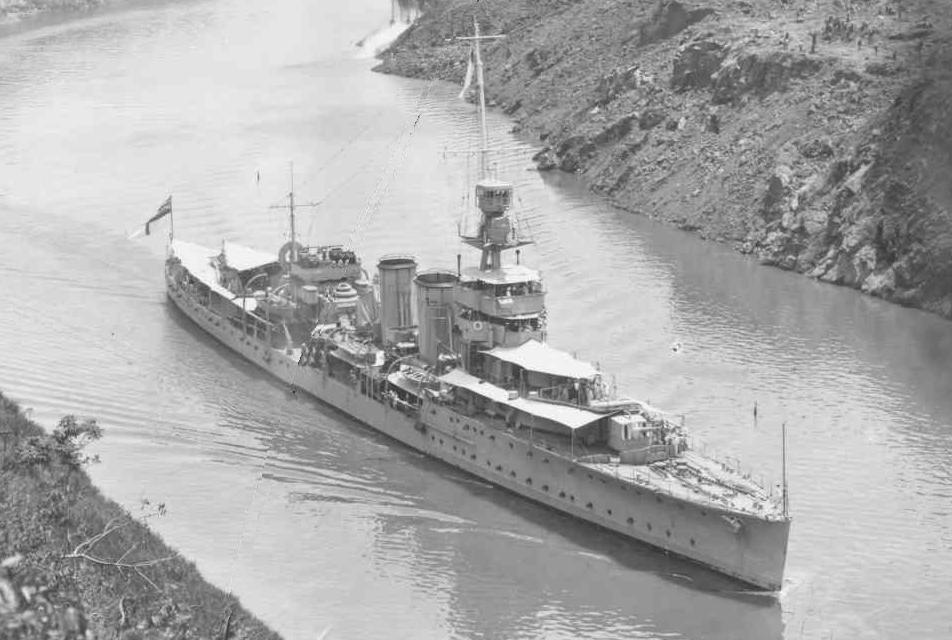
U-13 and U-48 leave dock at Kiel to join the growing fleet attacking Allied shipping around the British Isles.
Monday, May 24, 2010
Day 268 May 25, 1940
With 1st Panzer Division only 10 miles from Dunkirk (plus 2nd & 6th Panzer Divisions ready to tear up the coast) Hitler maintains his orders to hold them in their current positions. British, French and Belgian forces continue to fall back towards the Channel coast in an orderly retreat, covering each other’s flanks, under pressure by Bock’s Army Group B from the North and West. British Expeditionary Force uses the respite to reinforce defenses around Dunkirk, including the many canals.
Despite Guderian’s orders to leave Calais to the Luftwaffe, 10th Panzer continues to attack. British and French defenders fall back but still hold the city and harbour, where small fishing and pleasure boats begin evacuating the wounded. http://www.dean.usma.edu/history/web03/atlases/ww2%20europe/EuropeanTheaterGIF/WWIIEurope13.gif
In the evening, General Lord Gort decides to withdraw the BEF to Dunkirk, following assurances from War Minister Anthony Eden on May 23 that naval and air forces would be available for an evacuation by sea.
Despite Guderian’s orders to leave Calais to the Luftwaffe, 10th Panzer continues to attack. British and French defenders fall back but still hold the city and harbour, where small fishing and pleasure boats begin evacuating the wounded. http://www.dean.usma.edu/history/web03/atlases/ww2%20europe/EuropeanTheaterGIF/WWIIEurope13.gif

In the evening, General Lord Gort decides to withdraw the BEF to Dunkirk, following assurances from War Minister Anthony Eden on May 23 that naval and air forces would be available for an evacuation by sea.
Sunday, May 23, 2010
Day 267 May 24, 1940
10th Panzer Division attacks Calais but British and French defenders hold them off.
Further North, 1st Panzer reaches the Aa Canal 10 miles from Dunkirk, threatening encirclement of French and British armies in Belgium. Only 1 BEF battalion defends Dunkirk. However, Hitler halts the Panzers, not risking his precious armour against Allied armies in the coastal wetlands of Belgium. He is assured by Göring that the Luftwaffe can prevent any evacuation. Generals Brauchitsch and Halder rail against the order but are told it comes from the very top. Even Guderian, who has bent and ignored orders to get to the coast, had no choice but to comply.
With BEF trapped in Belgium and British Isles potentially under threat of invasion, British War Cabinet decides to bring home their remaining troops in Norway. They inform French General Béthouart, in command of the attack, who decides to continue with the capture of Narvik anyway before evacuation. Revenge anyone?
At 2.48 AM, 200 miles West of Brest, France, U-37 sinks Greek SS Kyma carrying 6000 tons of maize and 90 tons of trucks from Argentina to England (7 lives lost). http://www.uboat.net/allies/merchants/ships/323.html
Further North, 1st Panzer reaches the Aa Canal 10 miles from Dunkirk, threatening encirclement of French and British armies in Belgium. Only 1 BEF battalion defends Dunkirk. However, Hitler halts the Panzers, not risking his precious armour against Allied armies in the coastal wetlands of Belgium. He is assured by Göring that the Luftwaffe can prevent any evacuation. Generals Brauchitsch and Halder rail against the order but are told it comes from the very top. Even Guderian, who has bent and ignored orders to get to the coast, had no choice but to comply.
With BEF trapped in Belgium and British Isles potentially under threat of invasion, British War Cabinet decides to bring home their remaining troops in Norway. They inform French General Béthouart, in command of the attack, who decides to continue with the capture of Narvik anyway before evacuation. Revenge anyone?
At 2.48 AM, 200 miles West of Brest, France, U-37 sinks Greek SS Kyma carrying 6000 tons of maize and 90 tons of trucks from Argentina to England (7 lives lost). http://www.uboat.net/allies/merchants/ships/323.html
Saturday, May 22, 2010
Day 266 May 23, 1940
At 12.54 AM, U-9 torpedoes German steamer Sigurd Faulbaum (captured by Belgium on May 10) while under tow by 2 tugboats, 15 miles northeast of Zeebrugge. The stern sinks but the crew is rescued from the floating forepart by one of the tugs. http://www.uboat.net/allies/merchants/ships/322.html
2nd Panzer Division attacks Boulogne, triggering the evacuation of British 20th Guards Brigade which has just arrived. Several British and French destroyers are bombed until RAF fighters arrive at 7.20 PM. However, Germans are so close that tank shells and small arms fire claim several lives on the ships, including the captains of HMS Keith and HMS Vimy. 4,360 troops are rescued (naval losses; 61 dead, 62 wounded). http://www.historyofwar.org/articles/battles_boulogne_1940.html
Further North, British 3rd Royal Tank Regiment (equipped with cruiser tanks) and the 30th Motor Brigade land at Calais and hold off probing attacks by the 1st Panzer Division.
General Lord Gort withdraws British Expeditionary Force from Arras, where they had previously stopped Rommel’s Panzers.
2nd Panzer Division attacks Boulogne, triggering the evacuation of British 20th Guards Brigade which has just arrived. Several British and French destroyers are bombed until RAF fighters arrive at 7.20 PM. However, Germans are so close that tank shells and small arms fire claim several lives on the ships, including the captains of HMS Keith and HMS Vimy. 4,360 troops are rescued (naval losses; 61 dead, 62 wounded). http://www.historyofwar.org/articles/battles_boulogne_1940.html
Further North, British 3rd Royal Tank Regiment (equipped with cruiser tanks) and the 30th Motor Brigade land at Calais and hold off probing attacks by the 1st Panzer Division.
General Lord Gort withdraws British Expeditionary Force from Arras, where they had previously stopped Rommel’s Panzers.
Friday, May 21, 2010
Day 265 May 22, 1940
In Britain, the Emergency Powers (Defence) Act is passed, giving the government authority over persons and property for the duration of the war. In Paris, Churchill and Reynaud agree to a proposal by new French Commander-in-Chief General Weygand to attack the German salient caused by the Panzer thrust to the coast (essentially the same plan proposed by his predecessor, the disgraced Gamelin). However, it is too little, too late. The Germans are well established and Allied forces in Belgium are too busy fighting a retreat to attack.
Rommel holds near Arras, believing he faced 5 divisions in the British attack yesterday rather than 2 divisions plus 2 tank battalions. Guderian, however, pushes his Panzers North up the coast towards Calais and Boulogne.
Armed British merchant vessel Dunster Grange fights off a surface attack by U-37 using the deck gun, after U-37 misses with 4 torpedoes, off Land’s End. Dunster Grange will arrive safely in Liverpool on May 24. http://www.uboat.net/allies/merchants/ships/321.html
Rommel holds near Arras, believing he faced 5 divisions in the British attack yesterday rather than 2 divisions plus 2 tank battalions. Guderian, however, pushes his Panzers North up the coast towards Calais and Boulogne.
Armed British merchant vessel Dunster Grange fights off a surface attack by U-37 using the deck gun, after U-37 misses with 4 torpedoes, off Land’s End. Dunster Grange will arrive safely in Liverpool on May 24. http://www.uboat.net/allies/merchants/ships/321.html
Thursday, May 20, 2010
Day 264 May 21, 1940
While Guderian consolidates his position on the English Channel, Rommel bypasses Arras to the West and aims for the coast 50 miles away. However, French and British commanders (notably Churchill) have been urging a counterattack on the Panzer spearhead. 74 British tanks, supported by 2 infantry divisions, attack Rommel’s infantry near Arras. The German 37mm PaK anti-tank guns have no effect on the British “Matilda” tanks. In desperation, Rommel uses his 88mm Flak 18, 36 & 37 anti-aircraft guns in flat fire. The famous “88” anti-tank gun is born. An advanced Panzer regiment turns around and attacks the British from the rear, helping to push the British tanks back to Arras. Rommel has 89 killed, 110 wounded and 173 “missing” (AWOLs, who mostly return). http://en.wikipedia.org/wiki/File:1940FranceBlitz.jpg
Narvik. RAF 263 Squadron returns to Norway with 18 Gladiators & 46 Squadron provides 18 Hurricanes. They are unable to provide much protection to Allied warships in Ototfjord.

Narvik. RAF 263 Squadron returns to Norway with 18 Gladiators & 46 Squadron provides 18 Hurricanes. They are unable to provide much protection to Allied warships in Ototfjord.
Wednesday, May 19, 2010
Day 263 May 20, 1940

The Panzers reach the sea. In 10 days they have traveled 200 miles from the German border to the English Channel. Almost a million Allied soldiers are surrounded in Northern France and Belgium, leaving Allied plans to defend Belgium and France in ruins.
At 1.40 AM, Rommel’s 7th Panzer Division moves out of Cambrai and in 6 hours advances 20 miles. They pull up 2 miles from Arras, which is strongly held by the British Expeditionary Force, to allow the infantry to catch up.
The advance of Guderian’s Panzer Corps is even more spectacular. At 9 AM, 1st Panzer Division takes Amiens. At 7 PM, 2nd Panzer Division takes Abbeville. At 8 PM, a reconnaissance unit of 2nd Panzer Division reaches the sea at Noyelles-sur-Mer on the Somme estuary. They have covered 50 miles in a day, isolating British, French, Dutch, and Belgian forces to the North.
Tuesday, May 18, 2010
Day 262 May 19, 1940
At 6.31 AM, U-37 sinks Swedish MV Erik Frisell off Scotland. All 34 crew abandon ship and are picked up by the British armed trawler HMS Cobbers and landed at Stornoway. http://www.uboat.net/allies/merchants/ships/320.html
While Rommel waits at Cambrai to regroup his troops and repair his tanks, Guderian resumes his charge through St. Quentin to Péronne, only 50 miles from the French coast. The Panzers are beyond the French defensive line and advance rapidly, capturing supply dumps and disrupting Allied rearguard areas. They cut the supply lines of the British Expeditionary Force and French Armies trapped in Belgium, further disorganizing their resistance. BEF commander General Lord Gort ignores orders to attack South into the German flanks and instead considers a withdrawal to the Channel ports, including Dunkirk. Colonel De Gaulle’s French 4th Armoured Division attempts another failed attack on Guderian’s flank at Montcornet.
The RAF has lost over half the aircraft deployed to France & Belgium and the German advance now threatens its airfields. Squadrons begin returning to Britain. Future fighter operations over France will be carried out from bases in southern England.
While Rommel waits at Cambrai to regroup his troops and repair his tanks, Guderian resumes his charge through St. Quentin to Péronne, only 50 miles from the French coast. The Panzers are beyond the French defensive line and advance rapidly, capturing supply dumps and disrupting Allied rearguard areas. They cut the supply lines of the British Expeditionary Force and French Armies trapped in Belgium, further disorganizing their resistance. BEF commander General Lord Gort ignores orders to attack South into the German flanks and instead considers a withdrawal to the Channel ports, including Dunkirk. Colonel De Gaulle’s French 4th Armoured Division attempts another failed attack on Guderian’s flank at Montcornet.
The RAF has lost over half the aircraft deployed to France & Belgium and the German advance now threatens its airfields. Squadrons begin returning to Britain. Future fighter operations over France will be carried out from bases in southern England.
Monday, May 17, 2010
Day 261 May 18, 1940
Despite the stop order imposed on the German tanks, Rommel pushes 7th Panzer Division on to Cambrai and then halts to consolidate his supply lines and protect his flanks. He has advanced 85 miles due West (more than half way to the English Channel) in 5 days, capturing over 10,000 French prisoners & 100 tanks. His losses are about 50 dead and 100 wounded. The rapid pace constantly wrecks Allied counterattack plans; French formations are overrun while they prepare to attack. 7th Panzer becomes known as the “Ghost Division” for its ability to appear unexpectedly. Over 6 million French refugees take to the roads, convinced they will be occupied any minute. Populations of cities in Northern France drop by 90%.
German U-boats resume harassing Allied shipping in North Atlantic and around Britain, after several weeks patrolling the Dutch, Danish and Norwegian coasts in support of the invasions. U-60 & U-62 sail from Kiel, joining U-37 & U-43 at sea.
German U-boats resume harassing Allied shipping in North Atlantic and around Britain, after several weeks patrolling the Dutch, Danish and Norwegian coasts in support of the invasions. U-60 & U-62 sail from Kiel, joining U-37 & U-43 at sea.
Day 260 May 17, 1940
French 4th Armoured Division with 200 tanks including the formidable Char B (under Colonel Charles De Gaulle) attacks Guderian’s Panzer Corps at Montcornet. They take 500 prisoners but make little ground against improvised German defenses and then withdraw. German tankers are shocked by the French lack of aggression. Despite the halt imposed on the Panzers, Guderian is given permission for ‘strong reconnaissance’. He interprets this liberally and advances several km.
The dominos begin to fall in Belgium. Instead of attacking the German salient into Allied territory, British Expeditionary Force commander General Lord Gort sees the danger of encirclement in the Panzer thrust to his South and orders a retreat to the Scheldt River. This allows German 6th Army under General Reichenau to enter Brussels. Churchill, likewise worried by the panic in the French command, begins to think about saving the British Army. Churchill also considers recalling troops from Narvik.
The dominos begin to fall in Belgium. Instead of attacking the German salient into Allied territory, British Expeditionary Force commander General Lord Gort sees the danger of encirclement in the Panzer thrust to his South and orders a retreat to the Scheldt River. This allows German 6th Army under General Reichenau to enter Brussels. Churchill, likewise worried by the panic in the French command, begins to think about saving the British Army. Churchill also considers recalling troops from Narvik.
Saturday, May 15, 2010
Day 259 May 16, 1940
Churchill flies to Paris to assess the situation and confer with French PM Reynaud. He finds French officials burning government archives. Churchill asks “Where is the strategic reserve”? French Commander-in-Chief General Gamelin replies “Aucune” (“There is none”). Reynaud replaces Gamelin and recalls WWI veteran Maxime Weygand from obscurity in Syria.
The Panzers of Rundstedt’s Army Group A race out of their bridgeheads on the Meuse, cutting through the weaker parts of the French Army left to defend this region. French morale and resistance crumble as thousands of soldiers surrender. Guderian reaches Montcornet, 64km West of Sedan. Rommel drives another 35km from Cerfontaine, advancing through the night to Avesnes-sur-Helpe. German high command gets nervous about the extended flanks of this salient. Overnight, they order the tanks to hold while the infantry catches up.
http://upload.wikimedia.org/wikipedia/commons/0/03/10May-16May1940-Fall_Gelb.jpg
Despite the amazing success of the Panzers in Northern France, the French actually have more and better tanks than Germany. Demonstrating the strength of French armour, Char B1 Bis tank 'Eure' engages Guderian’s Panzers at Stonne, destroying 2 Pz IV, and 11 Pz II. 'Eure' survives hit 140 times by 20mm, 37mm and 75mm shells.
The Panzers of Rundstedt’s Army Group A race out of their bridgeheads on the Meuse, cutting through the weaker parts of the French Army left to defend this region. French morale and resistance crumble as thousands of soldiers surrender. Guderian reaches Montcornet, 64km West of Sedan. Rommel drives another 35km from Cerfontaine, advancing through the night to Avesnes-sur-Helpe. German high command gets nervous about the extended flanks of this salient. Overnight, they order the tanks to hold while the infantry catches up.
http://upload.wikimedia.org/wikipedia/commons/0/03/10May-16May1940-Fall_Gelb.jpg

Despite the amazing success of the Panzers in Northern France, the French actually have more and better tanks than Germany. Demonstrating the strength of French armour, Char B1 Bis tank 'Eure' engages Guderian’s Panzers at Stonne, destroying 2 Pz IV, and 11 Pz II. 'Eure' survives hit 140 times by 20mm, 37mm and 75mm shells.
Day 258 May 15, 1940
At 7:30 AM, French PM Reynaud phones Churchill saying “We are beaten. We have lost the battle”. At 10:15 AM, Dutch commander General Winkelman signs the surrender of armed forces in the Dutch homeland.
British, Belgian and French troops believe they face bulk of the German army (it is, in fact, Bock’s Army Group B) on a line from the Channel coast in Zealand, Holland, South to Sedan on the French/Luxembourg border. Meanwhile, the Panzers of Rundstedt’s Army Group A prepare to spring the trap. Reinhardt gets his 2 Panzer divisions across the Meuse at Monthermé, Guderian begins to break out from Sedan and Rommel advances 40km West from Dinant to Cerfontaine.
Battle of Gembloux. In the morning, Germans again attack the French line but they are pushed back French 75mm artillery & Hotchkiss 25mm anti-tank guns. In 4 days of attacking the Gembloux Gap, General Hoepner has lost about 250 tanks, the equivalent of an entire Panzer division. However, due to the Allied collapse at Sedan, the French pull back to the French border overnight.
Following the Rotterdam Blitz, British Bomber Command reverses a policy banning deliberate bombing of civilian property, outside combat zones. In the first bombing of German interior, 99 RAF bombers attack industrial targets in the Ruhr overnight.
British, Belgian and French troops believe they face bulk of the German army (it is, in fact, Bock’s Army Group B) on a line from the Channel coast in Zealand, Holland, South to Sedan on the French/Luxembourg border. Meanwhile, the Panzers of Rundstedt’s Army Group A prepare to spring the trap. Reinhardt gets his 2 Panzer divisions across the Meuse at Monthermé, Guderian begins to break out from Sedan and Rommel advances 40km West from Dinant to Cerfontaine.
Battle of Gembloux. In the morning, Germans again attack the French line but they are pushed back French 75mm artillery & Hotchkiss 25mm anti-tank guns. In 4 days of attacking the Gembloux Gap, General Hoepner has lost about 250 tanks, the equivalent of an entire Panzer division. However, due to the Allied collapse at Sedan, the French pull back to the French border overnight.
Following the Rotterdam Blitz, British Bomber Command reverses a policy banning deliberate bombing of civilian property, outside combat zones. In the first bombing of German interior, 99 RAF bombers attack industrial targets in the Ruhr overnight.
Thursday, May 13, 2010
Day 257 May 14, 1940
Holland capitulates. 9th Panzer’s Corps commander General Rudolf Schmidt threatens to bomb Rotterdam unless the Dutch garrison surrenders. Although the surrender is agreed, Luftwaffe planes do not get the order to abort & drop 95 tons of bombs destroying most of the city (1000 civilians killed, 85000 made homeless). General Schmidt will be awarded the Knight's Cross of the Iron Cross on 3 June 1940 for his role in the campaign in Holland.
Dutch Commander-in-Chief General Winkelman instructs his forces to lay down arms, although sporadic fighting continues for a few days. Dutch have 2300 dead, 7000 wounded (plus 3000 civilians killed). German lose 2900 killed and missing, 7000 wounded and 1300 airborne troops, captured on the first day, imprisoned in Britain.
Rommel secures his narrow bridgehead at Dinant by personally leading 30 tanks to drive French and Belgian troops back 3 miles to the Belgian border village of Onhaye (his tank is hit & a shell splinter wounds his cheek). 7th Panzer crosses the Meuse in strength. Further South at Sedan, Guderian also has his 3 divisions of Panzers across.
In central Belgium, General Erich Hoepner rashly sends 3rd & 4th Panzer Divisions in pursuit of Prioux’s Corps de Cavalerie. At Gembloux they come under fire from emplaced French artillery, losing many tanks.
Dutch Commander-in-Chief General Winkelman instructs his forces to lay down arms, although sporadic fighting continues for a few days. Dutch have 2300 dead, 7000 wounded (plus 3000 civilians killed). German lose 2900 killed and missing, 7000 wounded and 1300 airborne troops, captured on the first day, imprisoned in Britain.
Rommel secures his narrow bridgehead at Dinant by personally leading 30 tanks to drive French and Belgian troops back 3 miles to the Belgian border village of Onhaye (his tank is hit & a shell splinter wounds his cheek). 7th Panzer crosses the Meuse in strength. Further South at Sedan, Guderian also has his 3 divisions of Panzers across.
In central Belgium, General Erich Hoepner rashly sends 3rd & 4th Panzer Divisions in pursuit of Prioux’s Corps de Cavalerie. At Gembloux they come under fire from emplaced French artillery, losing many tanks.
Wednesday, May 12, 2010
Day 256 May 13, 1940
Norway. Allies launch their first amphibious assault of WWII to capture Bjerkvik and Øyjord, for use as staging post for landings at Narvik across the Rombaksfjord. Cruisers HMS Aurora & Effingham and battleship HMS Resolution bombard Bjerkvik at midnight, broad daylight in the latitude of Narvik but dark enough at Trondheim to prevent German aircraft taking off. French Foreign Legion and light tanks come ashore at Bjerkvik in landing craft at 1 AM (36 casualties). Many Norwegian civilian die in the fighting. French motorcycle troops ride along the coast and take Øyjord unopposed. http://www.ibiblio.org/hyperwar/UN/UK/UK-NWE-Norway/maps/UK-NWE-Norway-9.jpg
Northern France. In the morning, Rommel sends motorcycle troops across River Meuse over a weir & lock gate at Dinant, while Guderian’s troops cross in rubber boats at Sedan in the afternoon following intensive bombing of French defensive positions. Despite French artillery bombardment, they both establish bridgeheads and by the evening they have pontoon bridges in place and tanks are rolling over.
Holland. German 9th Panzer Division reaches the outskirts of Rotterdam and 22nd Flieger Division holds onto bridges in the city. Dutch Queen Wilhelmina leaves at noon on HMS Hereward. Her government exiles to London at 5.20 PM on HMS Windsor.
Belgium. Battle of Hannut continues. To cover the Gembloux gap, French tanks line up abreast in a long thin line. Large groups of Panzers easily punch through, causing havoc in the French rear and Prioux retreats to the defensive line at Gembloux. Over 2 days French lost 105 tanks, Germans 160.
Winston Churchill first enters the House of Commons as Prime Minister, accompanied by his predecessor Chamberlain who receives a better reception by far. Churchill gives his “Blood, toil, tears and sweat” speech (text and MP3 at http://www.fiftiesweb.com/usa/winston-churchill-blood-toil.htm)
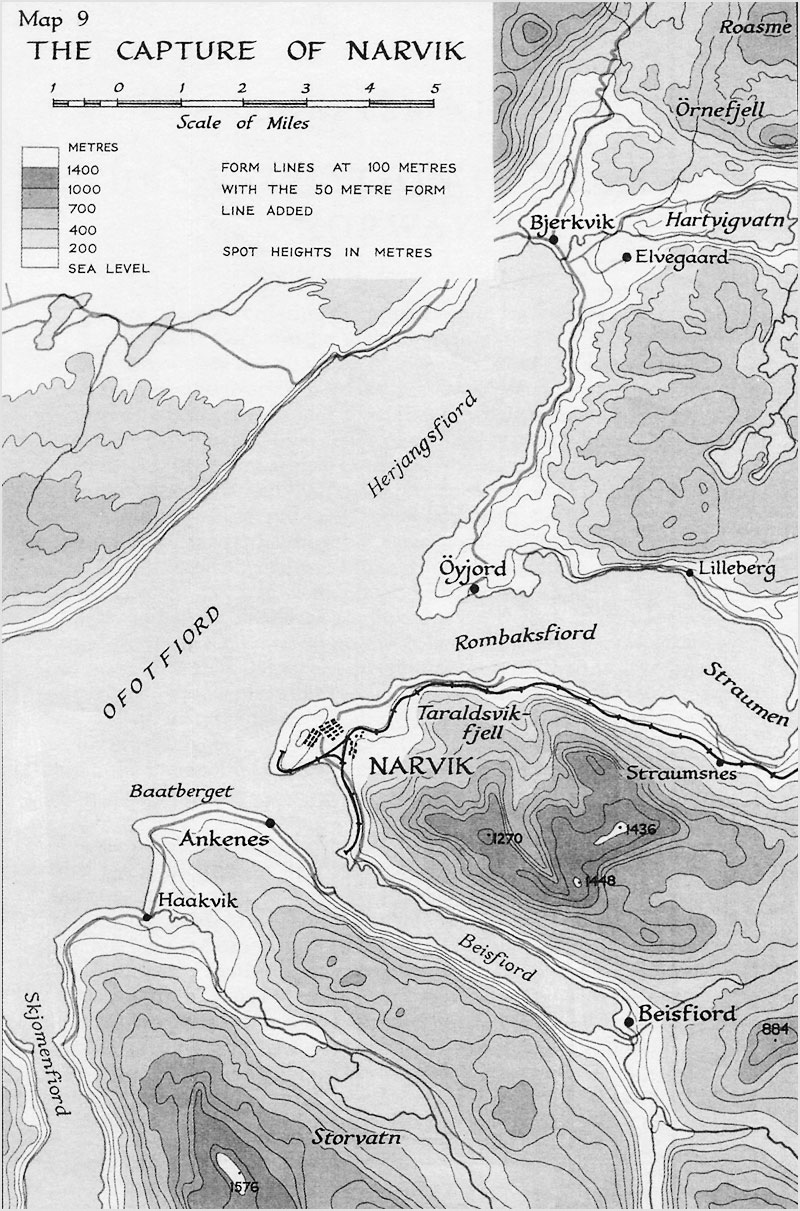
Northern France. In the morning, Rommel sends motorcycle troops across River Meuse over a weir & lock gate at Dinant, while Guderian’s troops cross in rubber boats at Sedan in the afternoon following intensive bombing of French defensive positions. Despite French artillery bombardment, they both establish bridgeheads and by the evening they have pontoon bridges in place and tanks are rolling over.
Holland. German 9th Panzer Division reaches the outskirts of Rotterdam and 22nd Flieger Division holds onto bridges in the city. Dutch Queen Wilhelmina leaves at noon on HMS Hereward. Her government exiles to London at 5.20 PM on HMS Windsor.
Belgium. Battle of Hannut continues. To cover the Gembloux gap, French tanks line up abreast in a long thin line. Large groups of Panzers easily punch through, causing havoc in the French rear and Prioux retreats to the defensive line at Gembloux. Over 2 days French lost 105 tanks, Germans 160.
Winston Churchill first enters the House of Commons as Prime Minister, accompanied by his predecessor Chamberlain who receives a better reception by far. Churchill gives his “Blood, toil, tears and sweat” speech (text and MP3 at http://www.fiftiesweb.com/usa/winston-churchill-blood-toil.htm)
Tuesday, May 11, 2010
Day 255 May 12, 1940
Holland. While Dutch defensive line holds German infantry in North and Central Holland, 9th Panzer Division races to Moerdijk bridges over Hollands Diep estuary (held by paratroops since the morning of May 10) 10 miles South of Rotterdam, preventing Allied forces reinforcing Fortress Holland. Dutch Crown Princess Juliana and Prince Bernhard leave for Harwich, England on HMS Codrington.
First Allied-German tank battle. 3rd & 4th Panzer Divisions attack through a 30 km gap between Dyle and Meuse rivers in Central Belgium (Gembloux Gap). At Hannut, they meet General René Prioux’s 2 French armoured divisions (confusingly, Corps de Cavalerie). French Somua S35 & Hotchkiss H35 tanks win the day with superior firepower and armour, destroying large numbers of German Panzer MkI & MkIIs.
Panzers emerge from the Ardennes forest and prepare to cross the River Meuse at Sedan, Monthermé and Dinant. Guderian’s Panzer Corps at Sedan are the first Germans on French soil.
First Allied-German tank battle. 3rd & 4th Panzer Divisions attack through a 30 km gap between Dyle and Meuse rivers in Central Belgium (Gembloux Gap). At Hannut, they meet General René Prioux’s 2 French armoured divisions (confusingly, Corps de Cavalerie). French Somua S35 & Hotchkiss H35 tanks win the day with superior firepower and armour, destroying large numbers of German Panzer MkI & MkIIs.
Panzers emerge from the Ardennes forest and prepare to cross the River Meuse at Sedan, Monthermé and Dinant. Guderian’s Panzer Corps at Sedan are the first Germans on French soil.
Day 254 May 11, 1940
Holland. German advance into Central Holland continues. 9th Panzer Division crosses the Meuse River and at noon finds an undefended bridge over Zuid-Willemsvaart canal 50 miles from Rotterdam. In Rotterdam, German 22nd Flieger Division holds onto bridges along Nieuwe Maas River. Dutch Marines attack but cannot dislodge them, leading to stalemate for several days.
Belgium. German tanks cross Albert Canal bridges secured by paratroops yesterday and spread out behind the Belgian defenses, drawing even more Allied troops North to bolster the defensive line. Belgian troops retreat and join the French and British arriving at planned positions on Dyle River (“Dyle Plan”). In the Southeast corner of Belgium between Luxembourg and France, 7 Panzer divisions spearhead the advance into the Ardennes forest of Runstedt’s massive Army group A (about 50 divisions total). They brush aside French cavalry guarding this unlikely route into France. The “Sickle Cut” has begun.
Belgium. German tanks cross Albert Canal bridges secured by paratroops yesterday and spread out behind the Belgian defenses, drawing even more Allied troops North to bolster the defensive line. Belgian troops retreat and join the French and British arriving at planned positions on Dyle River (“Dyle Plan”). In the Southeast corner of Belgium between Luxembourg and France, 7 Panzer divisions spearhead the advance into the Ardennes forest of Runstedt’s massive Army group A (about 50 divisions total). They brush aside French cavalry guarding this unlikely route into France. The “Sickle Cut” has begun.
Sunday, May 9, 2010
Day 253 May 10, 1940
At 5.30 AM, Germany invades neutral Luxembourg, Belgium & Holland without declaring war. Luftwaffe dominates the skies, bombing French, Dutch & Belgian airfields in the early hours & destroying many planes on the ground. For the first time, airborne troops find widespread use, under the innovative leadership of General Kurt Student. German tanks and infantry advance 10-15 miles into Holland and Belgium. The Allies enact the Dyle plan in response & begin moving towards the Dyle River in Belgium where they intend to hold a defensive line. http://www.scribd.com/doc/19556739/Blitzkrieg-02-France-Holland-and-Belgium-19401941
News of the invasion causes Chamberlain to consider staying on as Prime Minister but he is advised by many that he cannot now lead effectively. He resigns and advises King George VI to send for Churchill to invite him to form a government. Winston Churchill becomes British Prime Minister.
In Holland, German paratroops secure key bridges & airfields around Rotterdam & The Hague. Ju52 transport planes land 22nd Flieger Division in the Dutch heartland behind the main defensive line. Dutch Air Force manages to shoot down 18 Ju52s & prevent landings at Ypenburg airfield near The Hague, foiling German plans to capture Dutch Royal family, government & military leadership.
In Belgium, 10 DFS 230 gliders land 78 engineers under Oberlt. Rudolf Witzig on top of the massive underground Ebel Emael Fort, which dominates the Albert Canal and River Meusse crossings. They use secret magnetic hollow charges to disable steel & concrete gun emplacements and pen in the 700 defenders. Glider-borne troops also take two key bridges over the Albert Canal.
Northern Luxembourg is occupied easily, giving German tanks access to the Ardennes forest. The Royal Family is evacuated to safety in Luxembourg City in the South of the country.
News of the invasion causes Chamberlain to consider staying on as Prime Minister but he is advised by many that he cannot now lead effectively. He resigns and advises King George VI to send for Churchill to invite him to form a government. Winston Churchill becomes British Prime Minister.
In Holland, German paratroops secure key bridges & airfields around Rotterdam & The Hague. Ju52 transport planes land 22nd Flieger Division in the Dutch heartland behind the main defensive line. Dutch Air Force manages to shoot down 18 Ju52s & prevent landings at Ypenburg airfield near The Hague, foiling German plans to capture Dutch Royal family, government & military leadership.
In Belgium, 10 DFS 230 gliders land 78 engineers under Oberlt. Rudolf Witzig on top of the massive underground Ebel Emael Fort, which dominates the Albert Canal and River Meusse crossings. They use secret magnetic hollow charges to disable steel & concrete gun emplacements and pen in the 700 defenders. Glider-borne troops also take two key bridges over the Albert Canal.
Northern Luxembourg is occupied easily, giving German tanks access to the Ardennes forest. The Royal Family is evacuated to safety in Luxembourg City in the South of the country.
Saturday, May 8, 2010
Day 252 May 9, 1940
British Prime Minister Chamberlain awakens determined to stay in power. He suggests an alliance with the opposition Labour party to form a National Government but he is rebuffed. In the afternoon, he meets with Churchill and Halifax to determine a successor. Churchill silently refuses to support Halifax, who bows out. Churchill is the heir apparent.
While Chamberlain ponders his future, Germany prepares to advance on a broad front along its Western border from Luxembourg to the North Sea. The plan is to draw the French Army and British Expeditionary Force Northeast into Belgium and then encircle them with a fast armoured sweep across Northern France to the Channel. This requires moving huge armoured columns secretly through the Ardennes forest which the French have deemed impassable and left undefended.
At Narvik, Polish Podhale Brigade (4 battalions) arrives. Poles and French Chasseurs Alpins move to positions 5 miles West of Narvik, to reinforce South Wales Borderers. Allied artillery in the Narvik area totals 24 guns (French 75's & British 25-pounders) and 10 small French tanks.
At 0.14, U-9 torpedoes French submarine Doris (Q135) on the surface 40 miles off the Dutch coast. Doris sinks immediately (45 French & 3 British sailors killed). http://www.uboat.net/allies/merchants/ships/317.html
British destroyer HMS Kelly (captained by Lord Louis Mountbatten) is on patrol in the Skagerrak between Sweden and Germany with cruiser HMS Birmingham and destroyers HMS Kandahar, Bulldog, Kimberley, Kelly and Hasty, searching for German warships and troop transports. In the evening, they are attacked by 5 torpedo boats (Schnellboot). Kelly is hit amidships with one torpedo by S-31 and badly damaged (27 lives lost). Kelly will be towed back to Newcastle for repairs by HMS Bulldog, arriving May 13 after further Schnellboot attacks. She will be out of commission until December. http://www.naval-history.net/xGM-Chrono-10DD-38K-Kelly.htm
While Chamberlain ponders his future, Germany prepares to advance on a broad front along its Western border from Luxembourg to the North Sea. The plan is to draw the French Army and British Expeditionary Force Northeast into Belgium and then encircle them with a fast armoured sweep across Northern France to the Channel. This requires moving huge armoured columns secretly through the Ardennes forest which the French have deemed impassable and left undefended.
At Narvik, Polish Podhale Brigade (4 battalions) arrives. Poles and French Chasseurs Alpins move to positions 5 miles West of Narvik, to reinforce South Wales Borderers. Allied artillery in the Narvik area totals 24 guns (French 75's & British 25-pounders) and 10 small French tanks.
At 0.14, U-9 torpedoes French submarine Doris (Q135) on the surface 40 miles off the Dutch coast. Doris sinks immediately (45 French & 3 British sailors killed). http://www.uboat.net/allies/merchants/ships/317.html
British destroyer HMS Kelly (captained by Lord Louis Mountbatten) is on patrol in the Skagerrak between Sweden and Germany with cruiser HMS Birmingham and destroyers HMS Kandahar, Bulldog, Kimberley, Kelly and Hasty, searching for German warships and troop transports. In the evening, they are attacked by 5 torpedo boats (Schnellboot). Kelly is hit amidships with one torpedo by S-31 and badly damaged (27 lives lost). Kelly will be towed back to Newcastle for repairs by HMS Bulldog, arriving May 13 after further Schnellboot attacks. She will be out of commission until December. http://www.naval-history.net/xGM-Chrono-10DD-38K-Kelly.htm
Day 251 May 8, 1940
The Norway Debate in the House of Commons continues. The Labour opposition party calls for a vote of no confidence in Chamberlain’s government. Liberal party’s David Lloyd George (a former Prime Minister during WWI) attacks Chamberlain, asking him to sacrifice his premiership for the good of the country. Chamberlain expects to keep his usual large majority in a party-line vote, saying “At least I shall see who is with us and who is against us and I call upon my friends to support us in the lobby tonight. I have friends in this House.” However, his own party turns against him and he wins by only 281 votes to 200 and it is clear that he must resign.
Chamberlain’s critics are careful to spare his likely successor Winston Churchill from censure or blame. Chamberlain is depressed and confers late into the night with Churchill, debating whether he should step down.
Chamberlain’s critics are careful to spare his likely successor Winston Churchill from censure or blame. Chamberlain is depressed and confers late into the night with Churchill, debating whether he should step down.
Thursday, May 6, 2010
Day 250 May 7, 1940
Debate opens in British parliament on the conduct of the war. Prime Minister Chamberlain is ridiculed by opposition parties taunting him with his statement that Hitler had “missed the bus” in Norway. He is also denounced by Conservative MPs. Former Admiral of the Fleet Sir Roger Keyes, in full uniform & 6 rows of medals, details the government’s mishandling of military events in Norway. Backbencher Leo Amery rouses the House with a stunning critique and dooms Chamberlain with a quote from Oliver Cromwell “You have sat too long here for any good you have been doing. Depart, I say, and let us have done with you. In the name of God, go!”. http://en.wikipedia.org/wiki/Norway_Debate
Luftwaffe continues to pound Allied ships near Narvik. At 4.41 PM, British cruiser HMS Aurora is hit putting A and B turrets out of action (7 Marines are killed) but she will stay in action until 25 May. 5 die in a gun accident on WWI-era cruiser HMS Curlew.
Luftwaffe continues to pound Allied ships near Narvik. At 4.41 PM, British cruiser HMS Aurora is hit putting A and B turrets out of action (7 Marines are killed) but she will stay in action until 25 May. 5 die in a gun accident on WWI-era cruiser HMS Curlew.
Wednesday, May 5, 2010
Day 249 May 6, 1940
At Narvik, the Allies tighten the noose around General Dietl’s Regiment. South Wales Borderers (part of British 24th Brigade) are in position 5 miles West of Narvik, while French Chasseurs Alpins and Colonial artillery troops continue to press their attack on Labergdal Pass to the North, across the fjord. Both are held by German perimeter forces. However, Germans bomb Allied ships near Narvik. British cruiser HMS Enterprise is slightly damaged by a near miss (1 Marine killed).
German 2nd Gebirgsjäger Division continues their slow march North from Trondheim to reinforce Dietl’s Regiment.
At 2.00 PM, British submarine HMS Sealion attacks German transports Moltkefels and Neidenfels in the Skagerrak. Sealion fires 6 torpedoes, claiming three hits. But all torpedoes miss the targets and the transports are not damaged.
At 3.25 PM 30 miles East of Denmark, British submarine HMS Snapper fires 2 torpedoes at German armed merchant cruiser Widder but both miss.
German 2nd Gebirgsjäger Division continues their slow march North from Trondheim to reinforce Dietl’s Regiment.
At 2.00 PM, British submarine HMS Sealion attacks German transports Moltkefels and Neidenfels in the Skagerrak. Sealion fires 6 torpedoes, claiming three hits. But all torpedoes miss the targets and the transports are not damaged.
At 3.25 PM 30 miles East of Denmark, British submarine HMS Snapper fires 2 torpedoes at German armed merchant cruiser Widder but both miss.
Tuesday, May 4, 2010
Day 248 May 5, 1940
HMS Seal comes to the surface at 1:30 AM with no power or steering. 2 Arados & a Heinkel attack at 2:30 and Seal surrenders using a white table-cloth. All 60 crew are taken prisoner 3 hours later but fail to scuttle Seal, which is towed to the new German base at Frederikshavn, Denmark. She will be repaired & commissioned into the Kriegsmarine November 30 as UB. http://www.naval-history.net/WW2Ships-Seal.htm
http://www.uboat.net/boats/ub.htm
To support the landings of British Independent Companies (intercepting 2nd Gebirgsjäger advance towards Narvik), destroyers HMS Juno & Veteran arrive at Mosjöen while HMS Nubian & Firedrake go to Bodö.
At 5.25 AM, Hegra Fortress surrenders (under siege since April 12, resisting infantry and artillery attack plus Luftwaffe bombing), following Allied evacuation around Trondheim and the surrender of Southern Norway. 190 volunteer soldiers and civilian nurse Anne Margrethe Bang become POWs. 150-200 Germans have been killed or wounded attacking the Fortress while 6 Norwegians died (14 wounded).
(The next day, 6 May, the prisoners from Hegra were marched 50 kilometres to Berkåk where a PoW camp was established. At Berkåk the prisoners were set at work at building an improvised road from the river Orkla near Berkåk across the woods to Brattset, to help the German logistic system that had been severely hampered by the numerous blown bridges. Due in part to the poor physical condition of the prisoners after the harsh siege they had just experienced the road was never completed. At the end of May, Adolf Hitler personally ordered their release as an act of recognition of the defense they had put up under difficult conditions. The release happened in groups and by mid-June the last PoWs had been let go.)
http://www.uboat.net/boats/ub.htm
To support the landings of British Independent Companies (intercepting 2nd Gebirgsjäger advance towards Narvik), destroyers HMS Juno & Veteran arrive at Mosjöen while HMS Nubian & Firedrake go to Bodö.
At 5.25 AM, Hegra Fortress surrenders (under siege since April 12, resisting infantry and artillery attack plus Luftwaffe bombing), following Allied evacuation around Trondheim and the surrender of Southern Norway. 190 volunteer soldiers and civilian nurse Anne Margrethe Bang become POWs. 150-200 Germans have been killed or wounded attacking the Fortress while 6 Norwegians died (14 wounded).
(The next day, 6 May, the prisoners from Hegra were marched 50 kilometres to Berkåk where a PoW camp was established. At Berkåk the prisoners were set at work at building an improvised road from the river Orkla near Berkåk across the woods to Brattset, to help the German logistic system that had been severely hampered by the numerous blown bridges. Due in part to the poor physical condition of the prisoners after the harsh siege they had just experienced the road was never completed. At the end of May, Adolf Hitler personally ordered their release as an act of recognition of the defense they had put up under difficult conditions. The release happened in groups and by mid-June the last PoWs had been let go.)
Monday, May 3, 2010
Day 247 May 4, 1940
British mine-laying submarine HMS Seal, running on the surface for speed in the Kattegat, is bombed by a Heinkel He115 at 2:30 AM. Seal dives to 30m & lays 50 mines from 9 to 9:45 AM but German anti-submarine trawlers begin searching the area. Seal zigzags to avoid detection until 6.30 PM when she hits a mine & settles on the bottom, stuck in mud overnight & running out of air.
Allies mass 30,000 troops (French Foreign Legion & Chasseurs Alpins [mountain infantry], Polish troops, British 24th Brigade & Norwegians) around Narvik, still hoping to retake the town & disrupt iron ore traffic from Sweden.. French move overland to secure Bjerkvik, on the shore opposite Narvik, but are held at Labergdal Pass.
General Feuerstein’s 2nd Gebirgsjäger (mountain) Division starts marching 350 miles North from Trondheim to relieve Dietl’s 139th Gebirgsjäger Regiment isolated in Narvik. Allies deploy 300-500 troops each at Mosjöen, Mo & Bodö to stop them.
Polish destroyer Grom and British destroyer HMS Faulknor are patrolling off Narvik bombarding German positions when Grom is struck on her torpedo tubes by a German bomb at 8.28 AM and sinks (58 lives lost). British cruisers HMS Enterprise & Aurora and destroyers HMS Faulknor & Bedouin rescue survivors, starting at 8.35. The Polish survivors are embarked on a hospital ship for the passage back to England, departing Harstad on April 10 for the Clyde.
Allies mass 30,000 troops (French Foreign Legion & Chasseurs Alpins [mountain infantry], Polish troops, British 24th Brigade & Norwegians) around Narvik, still hoping to retake the town & disrupt iron ore traffic from Sweden.. French move overland to secure Bjerkvik, on the shore opposite Narvik, but are held at Labergdal Pass.
General Feuerstein’s 2nd Gebirgsjäger (mountain) Division starts marching 350 miles North from Trondheim to relieve Dietl’s 139th Gebirgsjäger Regiment isolated in Narvik. Allies deploy 300-500 troops each at Mosjöen, Mo & Bodö to stop them.
Polish destroyer Grom and British destroyer HMS Faulknor are patrolling off Narvik bombarding German positions when Grom is struck on her torpedo tubes by a German bomb at 8.28 AM and sinks (58 lives lost). British cruisers HMS Enterprise & Aurora and destroyers HMS Faulknor & Bedouin rescue survivors, starting at 8.35. The Polish survivors are embarked on a hospital ship for the passage back to England, departing Harstad on April 10 for the Clyde.
Sunday, May 2, 2010
Day 246 May 3, 1940
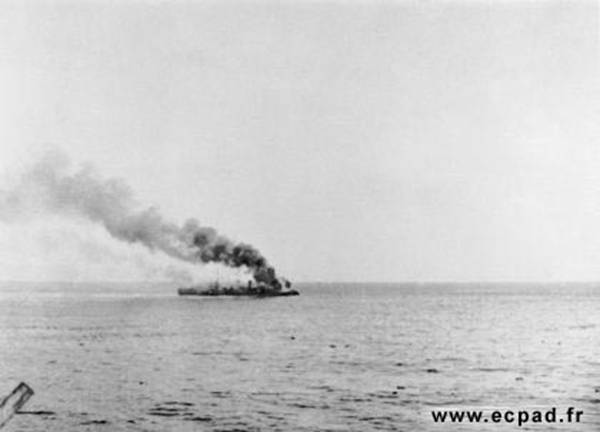
Evacuation of Namsos (1850 British, 2345 French & some Norwegian troops, 30 German POWs) is complete at dawn. HMS Afridi leaves at 4.45 AM, staying to shell vehicles left behind on the dock. Luftwaffe bombers attack the convoy at 9.45 AM. French destroyer Bison sinks at 10.10 (103 lives lost). Destroyers HMS Afridi, Imperial & Grenade rescue survivors from the water. Afridi is also bombed at 2 PM and sinks in 45 minutes (49 of Afridi’s crew, 13 men of 146th Brigade and 30 of the 69 just rescued from Bison are killed). HMS Griffin & Imperial pick up survivors.
With the British gone and the Norwegian King, government & CiC General Ruge safely in Tromsø 1000km North, Norwegian General Hvinden-Haug surrenders all troops South of Trondheim. In the evening, fighting ends in Southern Norway.
British and French troops evacuated from Åndalsnes arrive safely at Scapa Flow. French units are put on French passenger ships to Brest, to help with the defense of France.
Day 245 May 2, 1940
Vice-Admiral John Cunningham’s flotilla (3 cruisers, 5 destroyers & 3 transports) joins Mountbatten’s 4 destroyers off Namsos to evacuate General de Wiart’s 146th Brigade. However, yesterday’s evacuation at Åndalsnes alerted the Luftwaffe to British intentions at Namsos. Bombing runs start as the destroyers move up the Namsenfjord to begin embarking troops. HMS Maori is damaged by a near miss (5 lives lost, 18 wounded), delaying the operation until weather or nightfall blinds the Luftwaffe to their activities. In the evening heavy fog comes in and the destroyers safely ferry 5350 men out to the cruisers & transports overnight. 146th Brigade has lost 153 men killed or captured.
While the French & British are distracted by events in Norway and withdraw troops from the Western Front, Hitler prepares for his knockout punch against the Allies. 93 front-line divisions (including 10 armored & 6 motorised) are assembled to invade Northern France and the Low Countries (Fall Gelb).
While the French & British are distracted by events in Norway and withdraw troops from the Western Front, Hitler prepares for his knockout punch against the Allies. 93 front-line divisions (including 10 armored & 6 motorised) are assembled to invade Northern France and the Low Countries (Fall Gelb).
Day 244 May 1, 1940
At 1.15 AM, 15th Brigade’s train from Dombås crashes into a bomb crater (8 dead, 30 wounded). British troops march 17 miles through deep snow, arriving 9 AM at Åndalsnes.
In the evening, Admiral Layton’s flotilla arrives at Åndalsnes to evacuate 148th & 15th Brigade. Destroyers HMS Inglefield, Diana & Delight ferry troops from the dock to cruisers HMS Manchester & Birmingham. They embark 5084 men overnight, leaving for Scapa Flow by 2 AM the following day (May 2) unnoticed by the Lutfwaffe. British leave behind 1301 men killed, missing or captured. Norwegian General Ruge and his staff leave on destroyer HMS Diana to join the King and government at Tromsø. http://ibiblio.org/hyperwar/UN/UK/UK-NWE-Norway/UK-NWE-Norway-9.html
Mountbatten’s 4 destroyers arrive at Namsos to evacuate General de Wiart’s 146th Brigade. Overnight fog prevents them all entering Namsenfjord, so only 850 French Chasseurs Alpins are embarked. Anti-submarine trawler St. Goran is dive bombed and sunk.
In the Kattegat, British submarine HMS Narwhal fires six torpedoes at a German merchant convoy carrying parts of 2nd Gebirgsjager Division to Norway. German steamer Buenos Aires sinks (62 men, 240 horses killed) and Bahia Castillo is badly damaged (10 men, 26 horses killed).
In the evening, Admiral Layton’s flotilla arrives at Åndalsnes to evacuate 148th & 15th Brigade. Destroyers HMS Inglefield, Diana & Delight ferry troops from the dock to cruisers HMS Manchester & Birmingham. They embark 5084 men overnight, leaving for Scapa Flow by 2 AM the following day (May 2) unnoticed by the Lutfwaffe. British leave behind 1301 men killed, missing or captured. Norwegian General Ruge and his staff leave on destroyer HMS Diana to join the King and government at Tromsø. http://ibiblio.org/hyperwar/UN/UK/UK-NWE-Norway/UK-NWE-Norway-9.html
Mountbatten’s 4 destroyers arrive at Namsos to evacuate General de Wiart’s 146th Brigade. Overnight fog prevents them all entering Namsenfjord, so only 850 French Chasseurs Alpins are embarked. Anti-submarine trawler St. Goran is dive bombed and sunk.
In the Kattegat, British submarine HMS Narwhal fires six torpedoes at a German merchant convoy carrying parts of 2nd Gebirgsjager Division to Norway. German steamer Buenos Aires sinks (62 men, 240 horses killed) and Bahia Castillo is badly damaged (10 men, 26 horses killed).
Thursday, April 29, 2010
Day 243 April 30, 1940
German 196th Division infantry arrive at Dombås on foot (their vehicles are blocked by the blown bridges) and are held by 15th Brigade inflicting heavy casualties. At dusk, the British troops withdraw from Dombås by train, destined for Åndalsnes to be evacuated. Meanwhile at Namsos, General de Wiart’s 146th Brigade awaits evacuation by Mountbatten’s destroyer squadron which is en route.
RAF bombs German airfields in Norway at Stavanger & Fornebu (Oslo) to reduce German air attacks on the planned evacuations. This is only marginally successful. British aircraft carriers HMS Ark Royal & Glorious, bringing fighter support to cover the evacuation sites, are driven off by Luftwaffe bombing. Germans will dominate the skies during the evacuations.
At 5 PM, cruisers HMS Manchester & Birmingham and destroyers HMS Inglefield, Diana & Delight, under Vice Admiral Layton, depart Scapa Flow to evacuate 15th Brigade from Åndalsnes and nearby Molde.
Allied warships suffer several defeats and disasters.
French destroyer Maille Breeze sinks at Greenock, Scotland when 2 torpedoes of her own discharge accidentally in the forward section (25 dead, 48 wounded).
Minesweeper HMS Dundoon hits a mine at Smith's Knoll near Great Yarmouth and sinks (27 lives lost).
Anti-submarine sloop HMS Bittern, on anti-aircraft duty off Namsos, is dive bombed by Ju 87s and set on fire in the stern (20 lives lost). Destroyer HMS Janus takes off survivors, then torpedoes and sinks Bittern to prevent the capture of her anti-submarine detection equipment. Anti-aircraft ships have proved vulnerable & ineffective at defending shore targets (only 9 German bombers shot down during 1050 sorties).
ASW trawler HMS Warwickshire is sunk by German aircraft off Trondheim, Norway. She will be raised by the Germans on June 1 and used until 19 July 1943 when sunk again near Narvik by Soviet submarine S-56.
RAF bombs German airfields in Norway at Stavanger & Fornebu (Oslo) to reduce German air attacks on the planned evacuations. This is only marginally successful. British aircraft carriers HMS Ark Royal & Glorious, bringing fighter support to cover the evacuation sites, are driven off by Luftwaffe bombing. Germans will dominate the skies during the evacuations.
At 5 PM, cruisers HMS Manchester & Birmingham and destroyers HMS Inglefield, Diana & Delight, under Vice Admiral Layton, depart Scapa Flow to evacuate 15th Brigade from Åndalsnes and nearby Molde.
Allied warships suffer several defeats and disasters.
French destroyer Maille Breeze sinks at Greenock, Scotland when 2 torpedoes of her own discharge accidentally in the forward section (25 dead, 48 wounded).
Minesweeper HMS Dundoon hits a mine at Smith's Knoll near Great Yarmouth and sinks (27 lives lost).
Anti-submarine sloop HMS Bittern, on anti-aircraft duty off Namsos, is dive bombed by Ju 87s and set on fire in the stern (20 lives lost). Destroyer HMS Janus takes off survivors, then torpedoes and sinks Bittern to prevent the capture of her anti-submarine detection equipment. Anti-aircraft ships have proved vulnerable & ineffective at defending shore targets (only 9 German bombers shot down during 1050 sorties).
ASW trawler HMS Warwickshire is sunk by German aircraft off Trondheim, Norway. She will be raised by the Germans on June 1 and used until 19 July 1943 when sunk again near Narvik by Soviet submarine S-56.
Wednesday, April 28, 2010
Day 242 April 29, 1940
Having blown bridges to slow the German advance up the Gudbrandsdal valley, Paget’s 15th Brigade rests at Dombås while the remaining Norwegian troops withdraw through their lines. Oberst Fischer’s Kampfgruppe (196th Division) emerges from the Østerdal valley North of Dombås and links up with German troops from Trondheim, surrounding 15th brigade. Their evacuation now seems the correct course of action.
Destroyers HMS Kelly, Maori & Imperial plus French destroyer Bison (under Commander Lord Louis Mountbatten) leave Scapa Flow to evacuate Namsos, screened by cruisers HMS Devonshire and York & several destroyers.
At 5.30 PM, British submarine HMS Unity collides in fog with 1173-ton Norwegian freighter Atle Jarl in Blyth harbour and sinks in 5 minutes (4 lives lost, including Lieutenant John Low and Able Seaman Henry Miller who are posthumously awarded the George Cross for gallantry in assisting other crewmembers to escape from the sinking submarine). http://en.wikipedia.org/wiki/HMS_Unity_(N66)
http://www.ww2talk.com/forum/war-sea/20681-hm-submarine-unity-ss-atle-jarle.html
Destroyers HMS Kelly, Maori & Imperial plus French destroyer Bison (under Commander Lord Louis Mountbatten) leave Scapa Flow to evacuate Namsos, screened by cruisers HMS Devonshire and York & several destroyers.
At 5.30 PM, British submarine HMS Unity collides in fog with 1173-ton Norwegian freighter Atle Jarl in Blyth harbour and sinks in 5 minutes (4 lives lost, including Lieutenant John Low and Able Seaman Henry Miller who are posthumously awarded the George Cross for gallantry in assisting other crewmembers to escape from the sinking submarine). http://en.wikipedia.org/wiki/HMS_Unity_(N66)
http://www.ww2talk.com/forum/war-sea/20681-hm-submarine-unity-ss-atle-jarle.html
Tuesday, April 27, 2010
Day 241 April 28, 1940
British War Cabinet orders the evacuation of Paget’s and de Wiart’s troops around Trondheim, fuelled by Brigadier Hogg’s gloomy assessment of the situation at Åndalsnes. At 5 AM, Paget informs Norwegian General Ruge who is expecting landings at Trondheim instead of evacuation. Ruge, who has not been told of Operation Hammer’s cancellation, flies into a fit of rage. Calming himself, Ruge agrees to assist with the British retreat if Norwegian troops are withdrawn too, although he too believes 15th Brigade can hold out.
Justifying the faith in their abilities voiced by Ruge and Paget, 15th Brigade again holds German 196th Division all day at Otta & destroys 3 more light tanks. They then withdraw overnight 25 miles North to Dombås, blowing road & rail bridges to delay the German advance during the evacuation.
At Namsos, General de Wiart’s 146th Brigade retreats into a defensive perimeter. They are not pursued by German ground forces who allow Luftwaffe bombing to take its toll.
Justifying the faith in their abilities voiced by Ruge and Paget, 15th Brigade again holds German 196th Division all day at Otta & destroys 3 more light tanks. They then withdraw overnight 25 miles North to Dombås, blowing road & rail bridges to delay the German advance during the evacuation.
At Namsos, General de Wiart’s 146th Brigade retreats into a defensive perimeter. They are not pursued by German ground forces who allow Luftwaffe bombing to take its toll.
Day 240 April 27, 1940
Continued bombing of Åndalsnes forces the port HQ commander Brigadier Hogg to signal London that the situation is hopeless without air cover or antiaircraft guns. He suggests evacuation. An arriving supply convoy is bombed from 1.45 to 5 PM and turns away from Åndalsnes without landing much-needed antiaircraft batteries.
Hogg fails to consult his superior General Paget, who is furious and believes 15th Brigade can win if given fighter and antiaircraft support. Indeed, 15th Brigade holds German 196th Division all day at Kjorem then makes an orderly overnight withdrawal 17 km North to prepared defenses at Otta.
However, Oberst Fischer’s Kampfgruppe (196th Division) under has met little resistance in the Østerdal valley to the East. They are 60 miles Northeast of Dombås at Alvdal, threatening 15th brigade from the rear.
Hogg fails to consult his superior General Paget, who is furious and believes 15th Brigade can win if given fighter and antiaircraft support. Indeed, 15th Brigade holds German 196th Division all day at Kjorem then makes an orderly overnight withdrawal 17 km North to prepared defenses at Otta.
However, Oberst Fischer’s Kampfgruppe (196th Division) under has met little resistance in the Østerdal valley to the East. They are 60 miles Northeast of Dombås at Alvdal, threatening 15th brigade from the rear.
Sunday, April 25, 2010
Day 239 April 26, 1940
RAF Gladiators at Stetnesmoen engage the Luftwaffe, shooting down another He111 but using up all their fuel and ammunition. The last Gladiators are burned. The pilots board ships at Åndalsnes; Squadron Leader Donaldson will be awarded the DSO. http://surfcity.kund.dalnet.se/gladiator_norway_kills.htm
Hitler is furious at the landing of British 15th Brigade. Åndalsnes is bombed all day on his personal orders, destroying the wooden pier and all the British equipment & ammunition. However, 15th Brigade is 172 km away at Kvam, holding back German 196th Division which loses 50 men, 5 light tanks & 3 armored cars. In the evening 15th Brigade withdraws 3 km to new defensive lines at Kjorem.
British War Cabinet, now aware of defeats at Steinkjer & Tretten Gorge, starts to consider evacuating Namsos & Åndalsnes. Likewise, General de Wiart declines an offer of additional troops at Namsos since “in case of evacuation, this would complicate matters”. This “evacuation” mentality will gain momentum, despite 15th Brigade’s successes.
At 1.17 AM, U-13 sinks British steamer SS Lily with 2 torpedoes (the first does not detonate). All 24 hands lost. http://www.uboat.net/allies/merchants/ships/314.html
Hitler is furious at the landing of British 15th Brigade. Åndalsnes is bombed all day on his personal orders, destroying the wooden pier and all the British equipment & ammunition. However, 15th Brigade is 172 km away at Kvam, holding back German 196th Division which loses 50 men, 5 light tanks & 3 armored cars. In the evening 15th Brigade withdraws 3 km to new defensive lines at Kjorem.
British War Cabinet, now aware of defeats at Steinkjer & Tretten Gorge, starts to consider evacuating Namsos & Åndalsnes. Likewise, General de Wiart declines an offer of additional troops at Namsos since “in case of evacuation, this would complicate matters”. This “evacuation” mentality will gain momentum, despite 15th Brigade’s successes.
At 1.17 AM, U-13 sinks British steamer SS Lily with 2 torpedoes (the first does not detonate). All 24 hands lost. http://www.uboat.net/allies/merchants/ships/314.html
Saturday, April 24, 2010
Day 238 April 25, 1940
3000 British troops of General Paget’s 15th Brigade advance to the village of Kvam, 55 km South of Dombås, where they engage General Pellengahr’s 196th Division (8500 motorised infantry with tanks, artillery and dive bomber support) moving up the Gudbrandsdal from Lillehamer. 15th Brigade’s Hotchkiss 25mm anti-tank guns destroy 1 Neubaufahrzeug heavy tank, 1 light tank and an armored car in an initial skirmish. For the first time, a British line holds the German advance.
RAF Gloster Gladiators on Lake Lesjaskogsvatnet are discovered by the Luftwaffe and bombed for 8 hours. 13 Gladiators are destroyed or fall through the broken ice. Several Gladiators get off the ice and provide air cover for Paget’s 15th Brigade at Kvam. Returning, they shoot down 3 Heinkel He111s. 263rd Squadron Leader John Donaldson abandons the undefended lake airstrip and withdraws the remaining 5 Gladiators to Stetnesmoen, near Åndalsnes. http://www.aeroflight.co.uk/types/uk/gloster/gladiator/gladiator.htm
RAF Gloster Gladiators on Lake Lesjaskogsvatnet are discovered by the Luftwaffe and bombed for 8 hours. 13 Gladiators are destroyed or fall through the broken ice. Several Gladiators get off the ice and provide air cover for Paget’s 15th Brigade at Kvam. Returning, they shoot down 3 Heinkel He111s. 263rd Squadron Leader John Donaldson abandons the undefended lake airstrip and withdraws the remaining 5 Gladiators to Stetnesmoen, near Åndalsnes. http://www.aeroflight.co.uk/types/uk/gloster/gladiator/gladiator.htm
Friday, April 23, 2010
Day 237 April 24, 1940
RAF arrives in Norway! 18 Gladiator biplanes (263 Squadron) from HMS Glorious land on Lake Lesjaskogsvatnet, midway between Åndalsnes and Dombås. Notably, they have no anti-aircraft support. http://surfcity.kund.dalnet.se/commonwealth_donaldson2.htm
General Bernard Paget’s 15th Brigade lands at Åndalsnes, having sailed from France on April 15, and moves South down the Gudbrandsdal valley towards Lillehammer to reinforce Norwegian troops holding the German advance. They pass Morgan’s defeated 148th Brigade falling back to Åndalsnes.
In heavy Lutfwaffe attacks on Åndalsnes, anti-aircraft cruiser HMS Curacoa is badly damaged when she is struck by a bomb below the bridge, which explode between decks killing 45 and wounding 36. She will returned to Chatham for repairs and resume active duty in August.
U-23 make two unsuccessful attacks on British cruiser HMS York (returning to Scapa Flow from Åndalsnes having disembarked General Paget’s 15th Brigade).
Norwegian 6th Brigade under General Carl Gustav Fleischer attacks Dietl’s perimeter North of Narvik. They are held by the Germans at Lapphaug Pass but those marching over Fjordbotneidet mountain find Gratangsbotn undefended. Germans falling back from Lapphaug surprise the resting Norwegians (killing 34, wounding 64 and 130 prisoners) and retake Gratangsbotn (for 9 dead or missing, 16 wounded).
Battleship HMS Warspite, cruisers HMS Effingham, Enterprise, Aurora and destroyer HMS Zulu (screened by British destroyers HMS Encounter, Escort, Faulknor, Foxhound, Havock, Hero, Hostile and Polish destroyers Blyskawica and Grom) sail into Ofotfjord and bombard Narvik. HMS Effingham sinks captured British steamer Riverton, docked in the harbour. Naval commander Lord Cork and Orrery goes ashore away from Narvik to assess conditions on the coastline and again concludes that deep snow will make opposed landings impossible.
Hitler appoints Josef Antonius Heinrich Terboven as Reichskommissar or Gauleiter of Norway. http://commons.wikimedia.org/wiki/File:Bundesarchiv_Bild_101III-Moebius-029-12,_Norwegen,_Besuch_Himmler,_Terboven_und_Quisling.jpg
General Bernard Paget’s 15th Brigade lands at Åndalsnes, having sailed from France on April 15, and moves South down the Gudbrandsdal valley towards Lillehammer to reinforce Norwegian troops holding the German advance. They pass Morgan’s defeated 148th Brigade falling back to Åndalsnes.
In heavy Lutfwaffe attacks on Åndalsnes, anti-aircraft cruiser HMS Curacoa is badly damaged when she is struck by a bomb below the bridge, which explode between decks killing 45 and wounding 36. She will returned to Chatham for repairs and resume active duty in August.
U-23 make two unsuccessful attacks on British cruiser HMS York (returning to Scapa Flow from Åndalsnes having disembarked General Paget’s 15th Brigade).
Norwegian 6th Brigade under General Carl Gustav Fleischer attacks Dietl’s perimeter North of Narvik. They are held by the Germans at Lapphaug Pass but those marching over Fjordbotneidet mountain find Gratangsbotn undefended. Germans falling back from Lapphaug surprise the resting Norwegians (killing 34, wounding 64 and 130 prisoners) and retake Gratangsbotn (for 9 dead or missing, 16 wounded).
Battleship HMS Warspite, cruisers HMS Effingham, Enterprise, Aurora and destroyer HMS Zulu (screened by British destroyers HMS Encounter, Escort, Faulknor, Foxhound, Havock, Hero, Hostile and Polish destroyers Blyskawica and Grom) sail into Ofotfjord and bombard Narvik. HMS Effingham sinks captured British steamer Riverton, docked in the harbour. Naval commander Lord Cork and Orrery goes ashore away from Narvik to assess conditions on the coastline and again concludes that deep snow will make opposed landings impossible.
Hitler appoints Josef Antonius Heinrich Terboven as Reichskommissar or Gauleiter of Norway. http://commons.wikimedia.org/wiki/File:Bundesarchiv_Bild_101III-Moebius-029-12,_Norwegen,_Besuch_Himmler,_Terboven_und_Quisling.jpg

Thursday, April 22, 2010
Day 236 April 23, 1940
General de Wiart’s 146th Brigade retreats back to Namsos. Since arriving, they have lost 19 dead, 42 wounded & 96 missing.
Greater catastrophe befalls Morgan’s 148th Brigade at Tretten Gorge. Germans artillery pounds their line all morning & 3 light tanks break through defenses along the river road at 1 PM. Simultaneously, German mountain troops climb through the highlands and at 6 PM circle behind the Allied lines. At 7 PM, 148th Brigade retreats North but is bombed and strafed from the air. Only 309 men manage to escape to safety up the Gudbrandsdal. Since arriving, they have lost 705 men killed, missing or captured. http://ibiblio.org/hyperwar/UN/UK/UK-NWE-Norway/maps/UK-NWE-Norway-s2.jpg
Supreme War Council meeting in Paris agrees on the importance of capturing Trondheim, unaware of the British reverses at Namsos and Tretten Gorge. British have not yet inform the French that Operation Hammer has been cancelled.
Greater catastrophe befalls Morgan’s 148th Brigade at Tretten Gorge. Germans artillery pounds their line all morning & 3 light tanks break through defenses along the river road at 1 PM. Simultaneously, German mountain troops climb through the highlands and at 6 PM circle behind the Allied lines. At 7 PM, 148th Brigade retreats North but is bombed and strafed from the air. Only 309 men manage to escape to safety up the Gudbrandsdal. Since arriving, they have lost 705 men killed, missing or captured. http://ibiblio.org/hyperwar/UN/UK/UK-NWE-Norway/maps/UK-NWE-Norway-s2.jpg
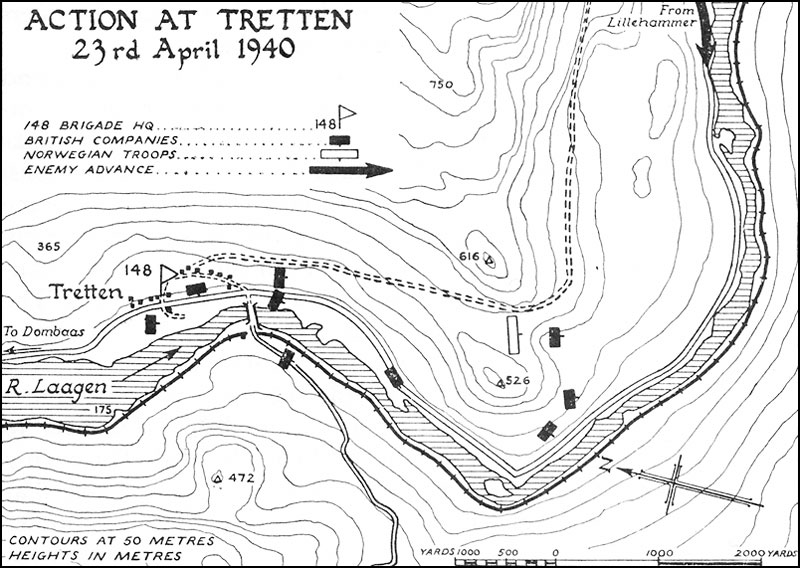
Supreme War Council meeting in Paris agrees on the importance of capturing Trondheim, unaware of the British reverses at Namsos and Tretten Gorge. British have not yet inform the French that Operation Hammer has been cancelled.
Wednesday, April 21, 2010
Day 235 April 22, 1940
General de Wiart, the old soldier, can smell defeat. German air strikes paralyse Namsos and his supply lines South. Moreover, he risks 146th Brigade becoming encircled at Vist by German landings on his flank. He orders a fighting withdrawal to Namsos.
Further South, Morgan’s 148th Brigade digs in at Faaberg, North of Lillehammer. However, they are flanked by German mountain troops scaling the 2,165ft high Balbergkamp, forcing another overnight retreat. They fall back 20 miles North and prepare to make a final stand at Tretten Gorge, one of the narrowest and most defensible point in the Gudbrandsdal.
At the Supreme War Council meeting in Paris, strategy takes a backseat to French political infighting between Reynaud and Daladier. Allies believe success is at hand and, out of touch with reality, contemplate a “march on towards Oslo”.
2 Lockheed Hudsons bomb U-43 in the North Sea. U-43 escapes with slight damage.
Further South, Morgan’s 148th Brigade digs in at Faaberg, North of Lillehammer. However, they are flanked by German mountain troops scaling the 2,165ft high Balbergkamp, forcing another overnight retreat. They fall back 20 miles North and prepare to make a final stand at Tretten Gorge, one of the narrowest and most defensible point in the Gudbrandsdal.
At the Supreme War Council meeting in Paris, strategy takes a backseat to French political infighting between Reynaud and Daladier. Allies believe success is at hand and, out of touch with reality, contemplate a “march on towards Oslo”.
2 Lockheed Hudsons bomb U-43 in the North Sea. U-43 escapes with slight damage.
Subscribe to:
Posts (Atom)